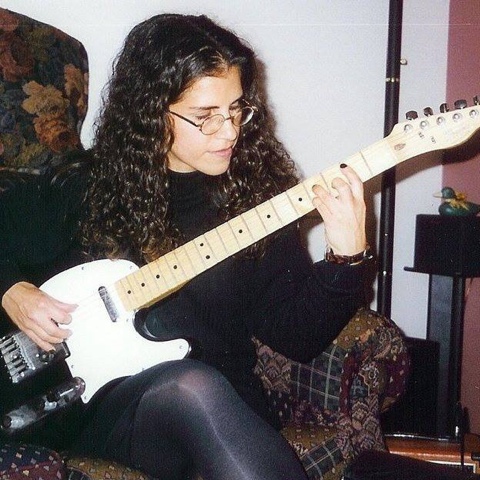
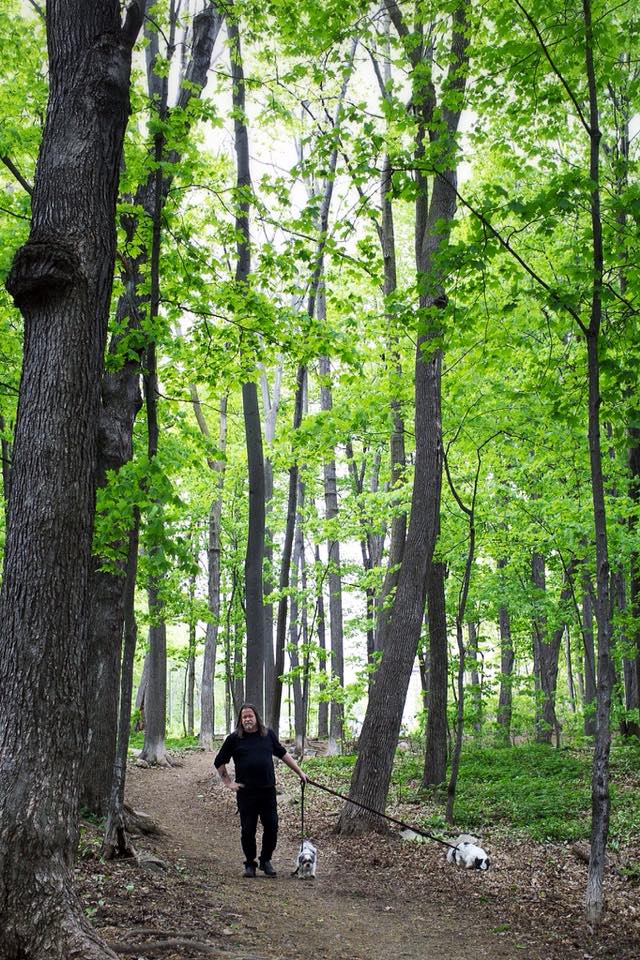
Ian and I met as thumbnails in the summer of 2012 through a random Facebook encounter. My profile picture at the time was a vintage shot of me holding my ex-husband’s telecaster. Ian’s only comment was “nice tele” to which I replied, “Thanks, it doesn’t live here anymore.” We met in person six months later at a comedy venue, another chance encounter, and Ian’s first words then were, “You’re not that short.” Real time Ian was a lot less scary than virtual Ian, and back then, a lot less hairy too.
I don’t believe things happen for a reason. When relationships end, when dreams die, we are left reeling. We feel pain and we grieve. We carry the people we used to be and the people we used to love with us like layers of clothing. They are part of us like chapters in a story. I wish I could say that love has nice neat borders but it doesn’t. It overlaps. Its fuzzy lines bleed from endings to beginnings and back again. Taking responsibility for this doesn’t help so much as acknowledging that what once worked is no longer working and that some things in life cannot be fixed.
I met Ian at a time when my pain was easing but his was only beginning. Recognizing this made me very cautious. Zero to sixty is a great song title but in practice, can make one’s stomach lurch and one’s head spin.
Thank goodness for friends who knew better.
Soon after we met, Ian recorded an original song called Be Myself which he sent to me via a YouTube link. It wasn’t so much a love song as it was an I’m okay, you’re okay, you wear your crocs, I’ll wear Birkenstocks, thank you for being a friend tribute. Bemused, I showed it to my friend Leslie who watched it with tears in her eyes and said, “Sharon, this is it. This is it.”
Several months later, while visiting Ottawa for a few days, I received a note from our friend Richard writing on Ian’s behalf.
3/5/13
Dear Sharon. Ian has come over for dinner. We’ve had a great time and a bit too much alcohol. Just want to let you know that Ian is one of the most authentic and honest people on the planet and he adores you. He’s sleeping here tonight so don’t worry about him driving home.
Ian also wrote to me that night. Here is his wine and limoncello-inspired poetry:
3/5, 11:14pm
Forlorn. Rich is playing guitar for me and I am forlorn. ****, Sharon. Forlorn. You know what that means !!!!!!?!?!?!!
3/5, 11:24pm
Take me home you silly girl. Take me home you silly girl. Take me home you silly girl. Take me home you silly girl.
‘Cause I’m still in love with you!
3/6, 1:25am
i am on the couch. stupid and silly. we played galway girl 30 times. i am a bit bent, as you can imagine. i feel. i feel. i can feel what you do to me. you, you glorious altruistic beauty. you shrugging godess! my love for you astounds. knows no bounds.
Seduction by lemon liqueur. How could I possibly resist? But I did hold off a little longer even when friends told me they’d never seen me happier. It felt too good to be true and I told Ian as much In response, he wrote this poem, my favourite to this day.
The Other Shoe
The other shoe
doesn’t have to drop
I placed both shoes
next to yours
Quietly when we met.
So as not to disturb
The perfect peace
Of being with you.
In the book “Twelve Steps to a Compassionate Life”, by Karen Armstrong, there is a chapter called, How Little We Know, and in it the author refers to the French Philosopher, Simone Weil, who used to say that love was the sudden realization that somebody else absolutely exists. I like this notion because it is so much more forgiving then other definitions we tend to use. Less like an arrow through the heart and more like the dawn rising or a fog lifting, making everything that was once dark, perfectly outlined.
The great thing about milestone birthdays is the opportunity we get to take stock of our lives. I’m not considering twenty or thirty to be milestone birthdays because usually at that age, a life lived is far ahead of us. Beyond forty however invites reflection and brings with it an acute awareness that the sands of time are running out. With that awareness comes less ambition and more mindful living. If we haven’t already arrived at this point, we are at least closer on our journey to getting there. And the realization that we aren’t going to live another forty, fifty, sixty years begs the question: how do we spend the precious time we have left?
What I call living an authentic life, Ian refers to as truth and beauty. Choosing an authentic life doesn’t mean opting for an easier one. It tests our integrity in the face of expectations. It risks disappointing the people we love. It sometimes feels like stepping off a cliff, hurtling towards the unknown. It is both frightening and liberating. Hey, in my experience, plan A almost never works out so might we well get familiar with the rest of the alphabet.
So here’s what I know about Ian so far, apart from the fact that he’s the real dude and he rocks long hair and we should all abide.
Ian’s gift is his capacity for deep and meaningful connections with people. His openness and vulnerability to share and to receive what is heartfelt is what makes him a loyal and supportive friend. His ability to hone passion for music in the absence of traditional talent is what makes him a great teacher, and as a result, there are many birds singing (in harmony) in the woods. On a personal note, it has encouraged me to play music again after a long hiatus, and sing out (egad), without fear of judgement.
We have a tendency to measure our accomplishments using numerical values: productivity, material accumulation, items crossed off a to-do list, number of likes on a Facebook post, number of albums sold, etc, and in the process forget that what really counts when living an authentic life is not so much what we have or what we do, but rather, who we are.
Truth and beauty reflects truth and beauty. It attracts truth and beauty. It brings out the best in all of us and provides us with a safe place to just be. Be ourselves. The only thing that really matters in this life is the difference we make in other people’s lives and the our contribution to the village around us. What we pass on when it’s time to leave this world is our one true legacy. It’s what’s truly earned while the rest is simply inheritance.
I look around the room and see Ian’s community and feel privileged to be a part of it. So many new and dear friends. It is a community of teachers and artists and supporters of artists and contributors and brilliant people who shine on.
I know Ian is feeling the pressure of turning sixty, the need to increase his output, get all his songs out there à la Willie Nelson. But let me share what I observed in the making of his last cd. It was like exhaling after holding his breath for so long. That the best moments in the making of the album were the little things. The laughs with George, the thrill of working with awesome local musicians, editing with Danny, the blast we all had in the making of Don’t: both song and video, and feeling profoundly moved by feedback received from the listeners who connected with the songs on a really intimate level or as Ian would say: they just get it. Let Willie Nelson continue to inspire you with his great volume of music but know that you have already arrived and anything you produce from this point on will be enough.
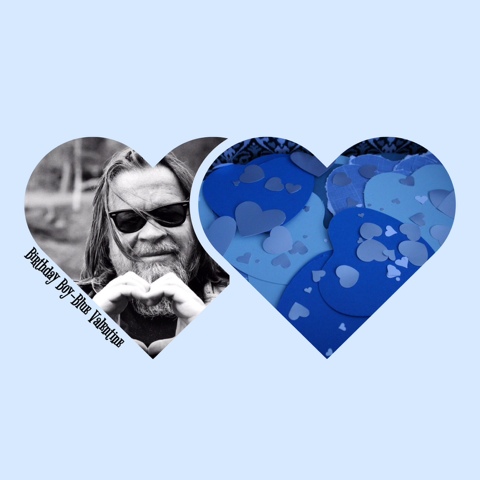
Ian, our younger selves would never have hooked up. We would have looked right past one another. Our fifties showed us the way and we have lived a lifetime of love in a few short years. My Boy Blue Valentine, sixty is simple. The time to be happy is now. The place to be happy is here.
❤