Today our electrician Justin is coming over to update our electrical panel. We met him during an inconvenient and very expensive week of appliance deaths: first our dryer, soon followed by the television. When our dryer broke, something blew in our electrical panel, an issue beyond house repairs 101.
Enter Justin who fixed the problem in one minute flat but told us that our 1964 electrical system was no longer capable of supporting our current (pun intended) electrical needs and that if we didn’t modernize it, our house could burn down. That was all I needed to hear to give him the go-ahead.
I am a natural catastrophizer, addicted to the high of things working out despite my imaging the worse case scenario. My husband, on the other hand, is the polar opposite to me, never thinking (or planning for) beyond the present moment. He lives in a cozy bubble labeled: here and now, a lovely place to be, except for those times he runs out of gas on the highway.
If you were to ask me what my worst fears are I would list them as follows: being lifted up and away by a bunch of helium balloons, explosions (I blame this on my brother’s cap gun going off near my head when we were kids), the house on fire (I’ve already set my hair on fire), being hit by rubber bands (thanks again to darling brother), and receiving a shock of the electrical kind (I wear oven mitts to turn the light switches on and off during the dry, winter months). I also have a fear of lighting matches or lighters. I can manage those long-handled lighters, however, that click on, like a gun.
The electrician is here now and he’s just called my husband down to the basement. I am in full catastrophe mode as I write this, imagining an explosive withdrawal from my bank account or that we may have to dig a trough from the basement out into the garden to access some obscure wire. If not accessing it may cause a fire, I will have to give him the go-ahead.
UPDATE: the bad news is that we cannot upgrade our electrical box sufficiently to plug in an e-car. For that kind of work, we would have to dig up the uni-stone patio just outside the basement window adjacent to the electrical box. Not a major catastrophe, but something to consider as we phase out gas-running cars.
The good news is that NOT digging up the patio will not precipitate a neighborhood big bang.
I am currently reading Margaret Atwood’s latest tome: Book of Lives: A Memoir of Sorts, and absolutely loving it. The details she offers in this autobiography are mind-boggling considering I barely remember what I did on the weekend.
For example, she recalls her high school home economics classes including her experience directing and acting in a home economics opera that starred: Orlon, Nylon and Dacron. Her brilliance was evident even then.
In another unrelated passage she is sixteen years old and crossing the school football field on her way home when she has an epiphany that she will become a writer. But it’s not the becoming a writer part that struck me, perhaps because that is obvious at this point. Rather, it is the description of the dress she is wearing, one that she made herself, that I find so impressive: « It was pink. It had a princess line, cap sleeves and a shirred bodice decorated with an ornamental gold button. » Cue wistful sigh …
I am fairly certain I took home-economics in high school, sometime in the mid-70s. Or did I? Apart from hemming slacks or sewing on a button, I haven’t got a clue how to sew. Did we learn in class? If we did, I didn’t retain anything. I definitely didn’t learn how to cook or darn a sock or grocery shop for a family.
I do remember one assignment where we had to make a model kitchen. I worked so hard on that project, quite unlike me, not being very artsy in those days, and made an exact replica of my parents’ kitchen, right down to the last detail. To my disappointment, I promptly lost two points, scoring 48/50 (I remember that detail) because I placed the fridge next to the oven. « That makes no sense. », the teacher argued when I explained I had used the family kitchen as a model. My parents obviously took this criticism seriously and moved the oven, now combined with the stove, a cupboard’s length away from the fridge when they renovated their kitchen in 1996.
Our updated/still outdated, family kitchen.
If there was one skill I took away from home-ec class, it was how to measure accurately. I remember the teacher instructing us to get down to eye level and to check for the bevel in the liquid. An eye-level bevel, if you prefer. It was the bevel, or slight dip in the liquid, that had to line up with the desired line on the measuring cup. The Merriam-Webster dictionary describes a bevel as 1. : the angle that one surface or line makes with another when they are not at right angles. 2. : the slant of a bevel.
Is the bevel lined up?
Liquid or solid, I have been a measuring perfectionist ever since, at least when it comes to baking, driving everyone around me crazy with my insistence that a third cup of flour cannot be eyeballed in a container meant to measure a quarter cup or even one cup. Instructions for heaping amounts makes me anxious. Is your heap subjectively the same size as mine? Mixing shortbread until crumbly begs clarification for how does one measure crumbly? Separating eggs? Pass me the egg separator.
Cooking is art but baking is pure chemistry. Mess with the ingredients and you will fail and your souffle may fall. I bake only tried and true recipes designed to succeed and to feed many. Not too many ingredients, no vague instructions, and preferably measurements that are not metric.
My mother, notorious for using an old plastic cup devoid of increments for all her baking, was a poor model.
My husband guesstimates too, but not when I am supervising. Oh, and he never uses a timer either, preferring his baking (and toast) in the form of burnt offerings.
Truly, I owe all my baking skills, and by extension probably my chemistry marks, to my high school home economics class. Perhaps if I hadn’t become fixed on the bevel, I would also be a whiz at hosting dinner parties.
Circling back to Margaret Atwood, she who can not only sew a dress and put on an opera, but who can also start a fire, handle a snake and write a whole bunch of wonderful books, not to mention poetry. Did her career start with home economics? Should I have paid more attention in class? If I had, would I have a novel under my belt by now?
Does anyone remember what home economics was all about in the 70s? Do they still teach those skills in school?
Margaret Atwood also credits Brownies with teaching her life skills. I got my baking badge in Brownies, (or was it Girl Guides?), making hot cross buns. I’d never eaten hot cross buns before. The candied fruit made me nauseous when I tasted the end result. To this day, the thought of candied fruit makes me ill. On the plus side, I learned the Lord’s Prayer by heart thanks to Brownies and so don’t feel too left out during Christian ceremonies.
The other night Ian was helping me with some baking and I handed him the 3/4 measuring cup instead of the one cup. It was a test. Thankfully, he realized his error and cleverly added another 1/4 cup of flour to the mix.
I need a little person’s kitchen with lower counters. I am tired of standing on a stool to bake. My childhood dream that never came true was to get an Easy Bake Oven for Christmas. I looked them up the other day and the modern version looks nothing like the oven in my home-ec model kitchen project. ☹️
I have decided to do a month of daily blog entries, each a minimum of 150 words. The reasoning for the word limit is twofold: 1. To not place too much pressure on my low-libido creativity. 2. To lower expectations of the reader.
Visiting my mother at her senior’s residence this past weekend, I quizzed her on her trustworthiness with respect to the chocolate adventure calendar I ordered her from Purdys, a British Colombia confectionary success story akin to Laura Secords. That calendar is sold out, possibly due to it being Day 1 of the countdown, but they do have a Braille version that is still available. I wonder if they are counting on patrons with low vision not being able to read the past due date on the little boxes?
Getting back to my mother’s interrogation, I reminded her that I had bought her an advent calendar last year and that she had completely disrespected the order of things. Not only did she consume the chocolates in her calendar in a willy-nilly manner, opening random windows instead of following the dates, but she also managed to eat all the chocolates in the space of five days versus twenty-five. By the time she was done, the calendar was a mere vestige of its former glory, a massacre of cardboard and containers ripped from their assigned slots.
Initially, she promised to obey the unwritten advent calendar rules. This after I reminded her that she used to collectively punish us kids for stealing chocolates without permission from the Christmas tree. (Seriously folks, what reasonable parent dangles chocolates in front of children then tells them they can’t have any? It was a cruel form of torture.) Then she asked me how she would know what day of the month it was.
That was a reality check for me. My mother has cognitive impairment and Parkinson’s, a double whammy. She is no longer oriented to time. At least that is what I tell myself when she refers to me as her mother. It can’t possibly be that she thinks I am old enough to be her mother, right?
I texted my sister for advice. She reminded me that my mother was on a diabetic diet during a recent hospitalization for a UTI. The diagnosis has been an elusive one over the years. Is she or isn’t she? She definitely has a sweet tooth and she has clearly has lost her sense of proportion. I would have to make the decision for her. No chocolate advent calendar this year, probably ever.
What I find interesting, is my tendency to please people through food. This desire to feed people and make them happy even though I don’t cook and have myself cut out sugar from my lifestyle because of a strong history of diabetes in the family. I do bake though much less than I used to. And I do enjoy very dark chocolate which satisfies the sweet tooth without all the sugar.
I am very much my father’s daughter. He was the ultimate food pusher, and a pushover himself when it came to refusing seconds. Being East Indian and Sikh, it was natural for him to want to share his table. We were reminded regularly of the starving kids in Africa (starving kids in India didn’t have the same impact in our house).
The advent calendar will go to my son, a model of control and reason. A kid whose Halloween candy would last him well past Christmas. If I didn’t know better, I would suspect we did not share the same DNA, certainly not the same sweet tooth.
As for my mother, she is quite happy with a friendly visit that doesn’t involve treats. Her residence serves dessert after lunch and supper, with tea and cookie breaks twice a day, enough to satisfy her sweet tooth.
I think my first entry is way past 150 words. So much for self control. LOL
When my son first introduced us to his girlfriend, Isa, two years ago, I remarked to my husband that there was a shift in the usual thrum of our household, normally a backdrop of whistling birds, whining dogs, Neil Young and our trusty Rabbit Air purifier.
I have one son from my first marriage, an only child who was frequently lonely growing up, who only stopped asking for a sibling when it was clear it just wasn’t going to happen. He takes up the least amount of real estate in a dwelling where the rest of its inhabitants frequently jostle for space on the podium.
Enter Isa; queue joy, laughter and vitality. Electricity buzzing, fingertips tingling.
Sean & Isa
You know that saying, you don’t appreciate what you have until it’s gone. Well, we didn’t know what was missing until it entered the house.
Sean has dyspraxia. The official diagnosis is Developmental Coordination Disorder (DCD). The way I explain it to him is that the muscles aren’t able to hear the messages from the brain properly.
Of course, there is more to it than that but that is the simplified explanation. Not only does it make the undertaking of new tasks challenging, it requires a lot more energy to complete those tasks, quickly burning through the bank of energy chips at any given moment.
This isn’t an excuse in life but it is an explanation.
For some reason, my son is inordinately hard on himself when he doesn’t meet his own expectations. He resists the notion that rather than it being a question of effort or ability, it is an energy management problem. It is like trying to run a marathon depleted, with the muscles not hearing the messages properly. At a certain point, he needs to recharge and/or regroup.
Learning strategies and acquiring new skills takes time. But sometimes in order to reach a destination in a reasonable amount of time or to meet a deadline, he needs to adapt or at the very least accept that this is his best effort under the circumstances, that perseverance can be exhausting and resilience can coexist with short-cuts.
Sean doesn’t drive yet. He will get there in his own time, at his own pace. Isa is fiercely independent, shares a car with her sister and owns a scooter. Though they both use public transit wherever possible, Isa does all the driving otherwise, and she never complains about it.
Let me tell you about Isa’s act of kindness when she picks up or drops off my son on her scooter, observed from my perch by the living room window, nestled in my reading chair.
Upon arrival, she texts Sean then dismounts the scooter, takes out the spare helmet from the storage compartment and when he emerges, lovingly attaches it for him, all the while making eye contact. There is always a long hug before and after the helmet adjustments, then a few words exchanged before they are off. She does the same thing when she drops him off.
A long hello and a long goodbye over a helmet ritual. Every single time.
I absolutely love her for this, for her generosity and compassion, for this simple fine motor act of kindness to spare my son the energy and effort it would take to manage the helmet straps himself. Energy conservation in a loving gesture.
I feel gratitude every time I witness this ritual. I want her to know that her small act makes a huge difference to Sean and to me.
I’ve had this Amana fridge since I first moved out of my parents’ house in 1988. At the time, I paid $400 each for four appliances that came with the flat: fridge, stove, washer and drier.
To my knowledge, the only appliance of that set to actually conk out over time was the washing machine. I know this because I took it with me when I eventually moved out.
The apartment came fitted with a brand new dish washer that I used for the first time around 1994. It was only used then because the colleagues I’d invited over for dinner insisted, possibly to get out of helping me clean up. The event was formally dubbed “Dishwasher Inauguration”, complete with celebratory banners and photos of me loading the dirty dishes into the racks with a stupid grin on my face.
As best laid plans often go, the dish washer didn’t work at first; turns out it wasn’t actually connected to any water supply, a technicality my then boyfriend sorted out for me afterwards.
I rarely used it after that, even with everyone cheering me on. I don’t think I owned enough plates to fill it up, at least not until my first husband moved in sometime in 1998.
When ex-husband and I bought a house in 2001, we took all the appliances with us, except for the stove and dishwasher, because the new house came with those.
To be clear, we didn’t buy a house so that we could have more space to entertain. We bought it to accommodate our then expanding fur family that included two pugs and two cats
Fast forward to 2025. I now share that same house with a new husband, a twenty-one year old son, three senior lap dogs (all rescues) and four birds.
The washer and drier are long gone, exchanged for sleeker, stacking models. The dishwasher that came with the house never worked in the first place and rather than replace it, we use to store canned goods (I really don’t mind hand washing dishes). As for the stove, only half of the elements work. Think of it as kitchen camping.
Good thing I don’t cook. I also don’t entertain, unless you consider the occasional witty repartee or pithy observation over tea/coffee/me and a heartfelt chat to be a good enough reason to stop by. We do host music rehearsalsand are now open for pit stops since we redid our powder room and changed our front door to a bright and welcoming yellow model that actually opens. No more yoo-hooing from the side door inviting guests to enter through the mud room entrance. I will however be buying a mat that reads “Goodbye” to counter any misconception that this is a party hub.
Welcome to the Yellow Door of the West. You may stay for coffee only.The new restroom which is always clean.
Back to the fridge. It simply keeps running, through wear and tear, neglect, abuse even.
We can’t wheel it out to clean behind it because apparently back in the 80s, you only cleaned behind your fridge when you moved or died, whichever came first.
I also can’t remove the drawing my son made in grade school because the tape I used to stick it on the freezer door has merged with the glass panel behind it.
The worst thing about this fridge is that I can’t use any of our vacation magnets to stick family photos and reminders on the front. Instead these items have been relegated to the narrow panels of magnetized fridge parts visible from the side. It’s simply not right.
I asked my son to help me measure the dimensions of the space because today the fridge is getting on my nerves and I am determined to clean behind it before I die, or at least before my next dinner party. I joked with my son that it is time to change the artwork on the front. He solemnly agreed.
If I lived alone, I would fill the space with a mini retro-coloured Smeg fridge in a happy colour like orange or lime green. Just big enough to hold my coffee cream and ready to heat microwave dinners. But I don’t live alone so I will have to buy a fridge large enough to accommodate a family of three humans, three dogs, four birds and the occasional guest.
I know I will regret this. They simply don’t make them like they used to. Something in between dispensable and indestructible will do. In the meantime, I am open to suggestions for recommended models. The only criteria are wheels.
I am trying to be a responsible parent and get my affairs in order because sometimes shit happens and I had my son late in life and he is an only child.
Call notary to make an appointment to revise Last will & Testament. Message left on voice box. ✅
Call Indian High Commision in Ottawa to obtain proper birth certificate. I left a message months ago and never heard back. Second message left after calling back several times and pressing options 1-9 in turn only to end up at the same generalized voice-box. ✅
Call funeral home to discuss cheapest and simplest body disposal plan. Get side-tracked googling « how to donate your body to science in Montreal ». Apparently there are criteria for this, folks, and they won’t accept bodies that are too tall or too heavy or with crooked limbs. It also excludes you from being an organ donor. Oh, and no autopsied bodies either. ❎
Looks like I will have to reschedule the death planning for another day. 🙄
I did ask my son if he had a preference, like would he be willing to carry my remains to Kiratpur in the Punjab (the Sikh equivalence to the Ganges for Hindus) and maybe take my dad’s remains which are languishing in my sibling’s closet while he’s at it? He looked vaguely horrified at this before shrugging uncomfortably.
I don’t blame him. I mean, who thinks about death planning at twenty-one? I would like his input though, since I won’t be around for consultation after the fact.
After my mother’s breast cancer diagnosis in 1988, my parents got seriously organized and set up a payment plan for their respective cremations and burial site. That being said, it was still a circus, right down to the funeral home calling me the first day of visitation after my dad died to tell me the urn they paid for was no longer in stock and could I come down and chose another one. We settled on a white marble urn, very Taj Mahal. To clarify, half of my dad is at the cemetery and the other half is waiting to be returned to the motherland.
Would love some input if you’d care to share your thoughts and experiences on estate planning.
I took my 89 year mother to the dental hygienist today, anticipating some kind of fall-out, considering recommendations made last visit have not been followed. My mother has dementia and Parkinson’s disease and has been living in a private residence for the past two years plus eight months. As for her cognitive status, I would describe her as pleasantly confused with poor short term memory. Most days she is not oriented to time. An anxious person by nature, she gets particularly worked up if she has a medical appointment that day, refusing to eat breakfast (or lunch), declining a shower and calling me repeatedly to verify what time I will be picking her up.
After a half hour of waiting room respite reading my book, the hygienist called me in to the room at my mother’s request (or as she put it later on in the car, the girl was going on and on and I didn’t understand anything she was telling me). To summarize, a large filling had falling out during the cleaning and the tooth had to be extracted. Then there were the expected admonishments: plaque and tartar build-up, she needs to floss and brush better, can someone assist her? She has Parkinson’s, I explained, and she doesn’t remember all these steps. I don’t live with her, the staff at the residence do their best helping the clients who need it with basic morning and evening routines. My mother, listening to us talk over her, interjected, « Just pull them all out. It’s less trouble. »
I think my mother is getting upset, I said. The hygienist apologized. No need, I said. I appreciate your professional recommendation but I simply don’t have a resource to help with daily dental care except to remind her when I visit. I can also bring her to see you more often and I can hire the dental hygiene resource that visits the residence.
I am semi-retired and most if not all my days off are spent either visiting my mother (my sister, who works full-time, visits on the days I am working), taking her to appointments, organizing family restaurant meals or taking care of her finances. The residence she lives in is fabulous. I hand-picked it for her based on the fact that it has been family run for years, has stability of staff and gives wonderful care. There are visiting dogs, resident birds, guest chickens in the summer. There is a recreation therapist extraordinaire, live music, and a beautiful garden with a koi pond.
She gets her hair done every two weeks in the hair salon in the basement, regular foot care, a specialized, visiting massage therapist for her lymphedema (a complication from radiation post excision of a sarcoma tumour). She has a devoted albeit paid companion, Fallon, who visits four mornings a week for three hours at a time to keep her company, go for walks and do puzzles with. Fallon was recommended by the residence and has been an absolute godsend, a salve for my mother’s loneliness, a life-saver when my mother broke her hip last year and was hospitalized for seven weeks. Fallon sat with her in the hospital when we could not be there.
In the elevator on the way down, my mother apologized for not taking better care of her teeth. I recognized the emotion she was feeling: it was shame and that made me angry because it was completely unwarranted. I joked that I also feel badly every time I have a dental appointment, being scolded for not flossing the right way, or the constant reminders that the tooth with the very large filling may have to be pulled because they can’t keep filling the cracks. Honestly, I was so sick of the negative feedback, so anxious every time I had an upcoming appointment (I’m sorry but dental hygiene fricken hurts!), that I decided to be extra vigilant in my dental care between visits. After years of bad press, I have had two excellent reviews in a row. Hurrah!
With respect to my mother’s care, it took me a while to accept that I am not responsible for her happiness, I can only make sure her needs are being met. She is the sweetest, kindest, most caring person you will ever meet, but she is also very dependent on her children for solace. Trying to fulfill this emotional neediness is like trying to fill a bottomless cup. I have learned to outsource where I can. We are fortunate that my father left enough funds to provide her with resources. That is what I will do with respect to her dental care. The residence has agreed to remind her to follow her routine at night. That being said, the Parkinson’s affects her coordination and I know it will not be enough. I have booked another appointment with the dental hygienist in three months and will contact the visiting hygienist to see what her availability is. That will have to be enough. Her tooth extraction is booked for September. I will deal with that when the time comes.
The elevator at the dentist’s office is mirrored. On the way down with my mother, I was struck by my reflection standing next to my mother’s. Twenty-seven years apart and we looked like contemporaries in that mirror. It was probably my state of mind at the time. We look alike, my mother and I, except for our colouring. She is fair with blue-grey eyes, like the ocean an admirer once noted, with beautiful, wavy, white hair. Next to her, I looked like someone’s chubby Indian Aunty, puffy-face and disgruntled, carrying her goodie bag from the dentist that contained a new toothbrush and floss.
Every once in a while, my mother calls me to ask me where the other Sharon is. «You mean the nice one? She’s long gone! », I answer wickedly.
You need to find the lighter side of dementia to survive it as a caregiver, always respectfully, of course. I don’t infantilise and I don’t lie. Thankfully, my mother’s sense of humour is intact and she always laughs at my response.
I am obsessed by the Tiny Chef Show, a recently cancelled Nickelodeon show I knew nothing about until I happened to come across this video on social media. Here I am, a grown-ass Indian Aunty, watching video clips of the show to cheer me up. I was so discouraged after today’s dental visit, I practiced some retail therapy and pre-ordered a Tiny Chef plushy that talks and a mug with Tiny Chef’s picture on one side and the words, « I’m Blokay » on the other. Okay, blokay … I know I have a problem folks buying stuffed toys at this age and stage, counterintuitive to the decluttering progress I’ve been making, but Tiny Chef makes me feel better, so there. Besides, I’m still planning to floss tonight and use my special dental pick to massage the gums between my teeth.
My intention this past year was to read at least 52 books, half the number from the previous year. I completed 85. That being said, I am aiming for 104 again. It isn’t the number that matters so much as prioritizing the practice of reading. The higher number makes a difference.
Here is the complete list that includes my reviews. Apologies for the formatting. I had a heck of a time copying and pasting from my master list in Notes.
I have also included a top 9 list at the end, books that shifted something in me and that will stay with me for a long time. I cannot say I only read for pleasure. I also read to learn, to listen to different voices and experiences, particularly when it comes to world events and social issues. The least I can do from my comfy armchair, is to bear some kind of third party witness, paltry as it may seem. It is not always a comfortable experience but it has made me feel that I am contributing in a very small way.
Whatever your reading intentions are for the upcoming year, I wish you all a healthy year with a clear view of what matters to you.
❤️
1. Ru — Kim Thúy ❤️❤️❤️❤️ Re-read after many years for bookclub, in French, then twice in English. The story is told through a series of beautifully written vignettes. Somewhere in between the readings, i saw movie version starring the brilliant Chloé Djandji. I recommend both the book and the movie.
2. A Crooked Tree — Una Mannion ❤️❤️❤️❤️ I’m so happy to have discovered this author. I read this book in 24 hours. It was a beautifully written coming of age story about grief, anger and family secrets. Reads like a thriller; I couldn’t put it down and was sad when I finished it. The author recently released her second book. Something to look forward to.
3. Monica — Daniel Clowes ❤️❤️❤️ A graphic novel that got rave reviews. The art was impressive but I had a difficult time with the story board, a mother-daughter relationship with twists and turns, divided into nine interconnected short stories, a couple of which take a bizarre twist. Overall, I recommend it but perhaps not as a first attempt at reading graphic novels.
4. The River Thieves — Michael Crummy ❤️❤️❤️❤️ Set in Newfoundland at the turn of the 19th century, the story features a cast of well-developed characters with a backdrop of devastation as the colonial settlers wrecked havoc on the aboriginal inhabitants of the area (the Beothuk) in the form of exploitation of their land and resources, the transmission of deadly diseases and the pure arrogance of white superirority as they attempted to make contact by force. The end result was the tragic extinction of the Beothuk. It is my introduction to this author and I will read him again.
5. The Vulnerables — Sigrid Nunez ❤️👍 I’ve been meaning to read this author for a while. Unfortunately, I was post cataract surgery when I read this book and quite motion sick switching back and forth to pharmacy reading glasses. As such, I had a hard time following the story line and keeping track of characters and their interrelationships. I bought the book because of the parrot on the cover, brilliantly named Eureka. There were some stellar bits of writing in the book as well. So don’t go by my tepid rating.
6. Black Boys Like Me — Matthew R. Morris ❤️❤️❤️ An important series of essays on race, identity and belonging written by an educator and anti-racism advocate born to a white mother and an immigrant father from Jamaica. The writing is an introspective and unflinchingly honest account of the author’s journey to authenticity as a racialized man.
7. The Thickness of Ice — Gerard Beirne ❤️❤️❤️❤️ Full disclosure: I received an ARC (advanced reading copy) of this book from the publishing company Baraka Books in return for a brief review. I loved the book and would read this author again. The story is set in Churchill, Manitoba, a town on the edge of the arctic. The narrative is replete with gorgeous and dreamy descriptions of polar bear sightings, beluga whales, northern lights and the sounds of cracking ice, woven in and out of the story line. The author is adept at describing the frigid, sometimes terrifyingly unpredictable climate of the region, emphasizing its remoteness and the loneliness of many of its inhabitants. The book begins with a confession by the protagonist, Wade Sinclair, who feels responsible for the death of his friend, Jack, decades earlier, over a woman they both loved named Tess. This act has haunted Wade ever since and kept him isolated from the world, that is until he meets a woman named Esther. They fall in love and soon after they move in together, Esther begins to investigate what happened to Jack. The story unfolds like a mystery from this point on, tension and suspense propelling us forward to its resolution: the truth about Jack’s death. All the while, Wade continues to measure the thickness of the ice, the same ice that Jack fell through.
8. Stories I Might Regret Telling You (A Memoir) — Martha Wainwright ❤️❤️❤️❤️ Audiobook version. I was already a huge fan of Martha’s music so listening to her narrate her own memoir so honestly and openly was an absolute treat. If I have any criticism of her writing it is that she is inordinately hard on herself, apologetic in her role as daughter, mother and wife. Many of us will recognize features of her perceived failings, albeit without the glamour of a being a musician. They are universal struggles after all, choosing and acting well to nurture, protect and love, even if at our own expense. I can only hope that writing this memoir was healing for her.
9. A History of Burning — Janika Oza ❤️❤️❤️❤️❤️ I heard about this book from a friend who was volunteering at the Vancouver Literary Festival this past fall and heard the author speak on a couple of panels. It’s a sweeping generational saga that spans about a hundred years, from 1898 to 1992 and is set in India (pre-Partition and post), Kenya, Uganda, the UK and Canada. It begins in 1898 when thirteen year old Pirbhai is tricked into an indentured contract working on the East African Railway for the British and covers the end of British colonial rule in Uganda and the eventual expulsion of South Asians during the dictatorship of Idi Amin. It is a story of resilience, resistance and courage and covers important topics such as racism not only of whites towards people of colour but South Asians towards blacks. My son is actually reading this book for one of his Liberal Arts courses which is kind of cool as it is rare we read the same material these days.
10. The Marriage Portrait — Maggie O’Farrell ❤️❤️❤️❤️❤️ I loved Hamnet and I am, I am, I am by this author and this story, set in the 1500s did not disappoint either. On one hand I was riveted, on the other I was appalled by the patriarchy of the time (that persists today), not to mention the absence of any kind of agency if you happened to be born female.
11. Coming to Find You — Jane Corrie ❤️👍👍 I read this thriller fairly quickly that has two alternating storylines, both set in Devon, UK. The first us the story of protagonist, Nancy, whose mother and step-father were murdered by her creepy step-brother, Martin. Martin was tried and found guilty of murder but remains obsessed by Nancy. The other story that threads through the present is set during World War 2 and tells the tale of Elizabeth Montague, owner of Tall Chimneys, and best friend to Nancy’s grandmother. The house is passed down to Nancy’s grandmother and mother and now provides a haven for Nancy from intense media scrutiny following the trial. The writing is okay but i found much of the plot and many of the characters to be contrived and over the top caricature-like.
12. The Red House Mystery — A.A. Milne 👍👍 Yes, the author is the same who wrote Winnie the Pooh. I can only describe this as a jolly, locked door murder mystery. I don’t know if it was because I had covid while reading this or that I was recovering from a second surgery to my reading eye, but I found the dialogue completely irritating. Just say what you really mean, Tony (the amateur detective) and don’t hide the facts from your best bud, Bill, who you nicknamed Watson, sending him on wild goose chases then taking full credit for solving the case as poor Bill splutters his congratulations.
13. Shut Up You’re Pretty (stories) — Téa Mutonji ❤️👍👍 I picked up this book as it is a finalist for this year’s Canada Reads competition beginning next week. Rather than call this stories, i would say they are a series of related chapters featuring Congolese immigrant, Loli, beginning when she first arrives in Canada as a child and continuing through to her emerging adulthood. The book touches on many themes poverty, racism, identity, mental health, femininity and sexuality. Not an easy read at times. It will be interesting to hear this book defended during the competition.
14. The Book of Boundaries — Melissa Urban ❤️❤️ I’m sure why I picked up this book but overall it was helpful. The important message is that in setting boundaries, you only have control over your own behaviour, not others. That should be a given, but I think we can all do better in communicating our needs when it comes to protecting our time and energy. I picked up some tips and the book will be useful as a reference for situations that may pop up.
15. Grief Is for People — Sloane Crosley ❤️❤️❤️❤️❤️ A beautiful and unflinching reflection on grief. If you’ve ever lost a friend, suddenly and/or tragically, you will find common ground in this memoir and it will help you articulate that loss in a way that is both cathartic and healing.
16. The Future — Catherine Leroux ❤️❤️❤️ Another Canada Reads 2024 selection. A dystopian novel presenting an alternate history of Detroit, one where it is never surrendered by the French. My favourite part of the book is the first section, told from the perspective of Gloria, a stranger to Detroit, who arrives in the city after the murder of her daughter Judith. Gloria is searching for answers as well as her missing granddaughters, befriending key neighbours along the way. The story then segues to a society of orphaned children, living in the woods of Parc Rouge. It was at this point that my eyes started to glaze over: too many nicknames, kid-speak and slang words/expressions to keep track of. Eventually the orphaned children and adults merge, sharing the necessary resources and skills required to problem solve. I had a hard time picking up the thread of the story again but overall, the writing was good and I appreciated the themes of community and resilience.
17. Denison Avenue — Christina Wong ❤️❤️❤️❤️ Yet another Canada Reads selection. I loved this story and will be rooting for it during the competition. The story is told through words and ink artwork that share the same binding but are back to back, each accessed by flipping the book 180 bottom over top. The setting is Toronto’s Chinatown Kensington Market and follows Wong Cho Sum, an elder who tragically loses her husband to a hit and run. As she tries to cope with her grief, she must navigate all sorts of challenges: financial difficulty, racism, language barrier, loneliness, and the changing demography of her neighbourhood. The format of the text is artsy and fun and adds to the textures/layers of the story.
18. Morel — Maxime Raymond Bock ❤️❤️❤️❤️ I received this book as an advanced reader’s copy from local publisher Baraka Books. I loved this story set in Montreal and featuring protagonist Jean-Claude Morel, a construction worker, born during the Great Depression, who has worked on such iconic infrastructure as the underground metro tunnels, highways, and man-made islands in the St. Lawrence (example: Île Notre-Dame for Expo 67). The character of Morel is gruff and unapologetic yet written with such underlying tenderness I couldn’t help but think fondly and with new respect of the labourers who built this city. I have known men like Morel who sustained sometimes debilitating injuries under working conditions that would no longer be acceptable according to more recent work safety regulations. The story is set in an area of Montreal I had little knowledge of, neighbourhoods such as le Faubourg à m’lasse, named for the sweet smell of molasses coming from massive metal barrels near the Molson Brewery and the Canadian Rubber Plant. The neighbourhood was razed in 1963 to make way for La Maison Radio Canada. Themes include poverty, expropriation, history of Montreal and its infrastructure, social issues, French Canadian culture. A great read, especially if you live here. I highly recommend it.
19. By Grand Central Station, I Sat Down and Wept — Elizabeth Smart ❤️❤️❤️ This book was referenced in the book Grief is for People (see #15 above). “I am possessed by love and have no options.” In gorgeous, poetic prose, Elizabeth Smart outlines her obsessive love for poet George Barker after coming across his work in a London bookshop. Though he never left his wife, their love affair produced four children. In fact, he bore children with at least four different women for a total of fifteen! If I am quite honest, in spite of the beautiful writing, reading the book made me feel very sorry for Elizabeth Smart and George Barker’s long-suffering wife.
20. So Late In the Day — Claire Keegan ❤️❤️ ❤️ I am a big fan of Claire Keegan and had read all her works up until now. I must admit to feeling a little ripped off with this latest collection of short stories, three to be exact, as I had already read the middle one from a previous collection, The Long and Painful Death, featured in Walk the Blue Fields. My husband read So Late in the Day in a previous issue of the New Yorker but it was new for me. I hope we won’t have to wait too long for more works from this Irish writer.
21. Here After — Amy Lin ❤️❤️❤️A memoir about grief written segmentally, almost in a stream of consciousness format. The author loses her husband suddenly, senselessly and tragically. How can life continue for her from this point on?
22. Your Absence is Darkness — Jón Kalyan Stefánsson ❤️❤️❤️❤️ Translated from Icelandic, this beautifully written epic family saga is a microcosm of tender love stories spanning several generations. I recommend readers refer to the list of characters at the end of the book, something that would have helped me keep track of the time line and Icelandic names a little better. The musical references, or what the author refers to as Death’s Playlist, is a treat and are also listed at the end of the book.
23. When Words Are Not Enough (Creative Responses to Grief) — Jane Harrison & Jimmy Edmonds ❤️❤️❤️❤️ I read this book for inspiration, looking for a way to express my grief through photography after my father’s death, while participating in a photography workshop with the theme: Absence/Presence, run by local photographer, Linda Rutenberg. Grief is an active process, hard work and an expression of love for the person we are missing. The book was helpful and validating: the sharing of very personal stories of loss and the expression of that loss. Particularly pertinent for those who have lost a child suddenly and tragically. The couple have also produced some beautiful documentaries on the subject.
24. Dear Haider — Lili Zeng ❤️👍👍 I received this book as an advance reading copy from local publisher: Baraka Books. I was excited to read it because the author who was born in Guangzhoo, China, moved to Montreal as a child and holds a PhD in biophysics from McGill Univeristy, my alma mater. The story covers a lot of themes including identity, cultural clashes in a mixed race couple, parental pressure and expectations, young love, mental health and racism. Whereas I enjoyed the story, I would probably file it under « young adult ». There were some passages that made me cringe, like when main character Liz who is East Asian is repelled by her new boyfriend Haider’s stretch marks and darker skin the first time they are naked together. Haider is South Asian and Muslim. The ending was a bit extreme too with Liz undergoing a complete mental health break-down. Although there were signs of her unravelling throughout the book, her psychotic break is conveniently crammed into the last few pages. I do appreciate the author tackling some difficult topics. Not easy to write about. A good friend has two young daughters studying physics. I think I will pass the book onto them and see what they think.
25. The Cat Looked Back — Louise Carson ❤️❤️👍 I bumped into the local author at Chapters this past weekend and decided to splurge on this cozy mystery set in the village of Lovering along Lake of Two Mountains. I was drawn to protagonist Prudence Crick, possibly because she is about my age and likes baking, cats and helping people. The story goes really well with a good cup of coffee and scone. I finished it in a day and recommend it if you are looking for a light read.
26. Death and the Penguin — Andrey Kurkov ❤️❤️❤️❤️ I read this book, a brilliant satire, for our Mariposa Cafe bookclub. It is set in Kyiv sometime in the 1990s, after the fall of the Soviet Union. Life is pretty bleak in the Ukraine during that time, a matter of survival really, as criminal gangs and the mafia run rampant. The story unfolds from the perspective of protagonist Viktor, a short story writer who finally gets a break when he gets hired by a local newspaper as an obituarist, the twist being that he writes the obituaries of important people before they die. Viktor has a penguin named Misha who provides comic relief but we soon realize that the penguin is a reflection of Viktor’s state of mind. A very good read. I am in search of the sequel, Penguin Lost, if anyone has a lead.
27. The Three-Body Solution — Cixin Liu (translated by Ken Liu) ❤️❤️❤️❤️ I’ve had this book unread on my shelves for a couple of years and was prompted to read it because it had been adapted to a new Netflix series that is getting great reviews and I hate reading books after they have been adapted. The book is hardcore, science fiction at its most brilliant and as such it will help if you have a basic knowledge of physics though not necessary. One of the things I love the most about good science fiction writing is its oversight of the human race: not only our great potential for scientific advancement, imagination and wonder but also our propensity to self destruct. As to the latter point, you have only to look at the state of the environment with global warming, the struggle to assert basic human rights even in the West, and the utter insanity of people going hungry, children starving, in stark contrast to the abundance so many of us know.
28. Bury the Lead — Kate Hilton and Elizabeth Renzetti ❤️❤️👍 A decent cozy murder mystery (you’ll drink lots of tea and eat lots of scones) set in a small town with a strong female protagonist, journalist Cat Conway, and lots and lots of theatre drama.
29. The Husbands — Holly Gramazio ❤️❤️❤️ A fun read but I think I would have enjoyed it more a few of decades aga when I was in the process of settling down. It starts off when main character Lauren is greeted by her husband Michael when she comes home from a hen party. The only problem is, she’s not married. She soon realizes that her attic is some kind of time-space portal and husbands can be switched out by simply asking them to investigate an imaginary noise or fetch a stored item. The results are at times hilarious, other times frightening.
30. Martyr! a novel — Kaveh Akbar ❤️❤️❤️❤️❤️ This book has received a lot of praise since it was published and rightly so. It is simply a brilliant read. It is the story of an Iranian born man, Cyrus Shams, a recovered addict and alcoholic, and his search for the meaning of life and a meaningful death. I am at a loss at how to describe it so I will borrow the words of author Lauren Groff : « The best novel you'll ever read about the joy of language, addiction, displacement, martyrdom, belonging, homesickness. » Available only hardcover, large print paperback or ebook.
31. Knife — Salman Rushdie ❤️❤️❤️❤️ I’ve never read anything by this author before. I have Midnight’s Children waiting in the wings, a must read because it is about India’s Partition in 1947, but a friend mentioned magical realism, my least favourite genre, and it put me off. This book of meditations follows an attack on the author’s life in August 2022 by a young man who accused the author of being disingenuous as his reasoning. It was the title of the book that compelled me to buy it. The author lost an eye during the attack. When I had my retina detachment in November 2022, I was told there was a stabbing case ahead of me on the wait list for emergency surgery. I remember trying to imagine what it must be like to be stabbed in the eye (I couldn’t really) and told you had to wait for surgery to salvage what may or may not be left of your vision. I’m pretty sure that person was in the recovery room with me after my surgery though I was positioned on my stomach and unable to see. The book is very moving: the writing reflective and honest. I recommend it. I will tackle Midnight’s Children soon.
32. Penguin Lost — Andrey Kurkov ❤️❤️❤️❤️ A magically realistic sequel to Death and the Penguin (see review # 26 above). The author explains that he wrote this book in response to the outcry of readers left dissatisfied over the uncertainty of what happened to Misha the penguin in the first book. In Penguin Lost, protagonist Viktor does whatever it takes to atone for leaving Misha behind when he escaped to Antarctica, including a brutal detour to war-torn Chechnya.
33. Interesting Facts About Space — Emily Austin ❤️❤️❤️❤️ I loved the author’s previous book: Everyone in this Room Will One Day Be Dead. This one is as delightful about an neuro-atypical, lesbian named Enid who works for the Space Agency and is obsessed with space trivia and who happens to have a phobia about bald men. Kind of tragi-comic with laugh out loud moments and the best part: a happy ending. I loved it.
34. The Ministry of Time — Kaliane Bradley ❤️❤️❤️❤️❤️❤️ I absolutely loved this book, so much so I didn’t want to finish it. The writing, the characters, the premise or rather the possibility of time travel, all of it brilliant. There were moments of great tenderness that reminded me a little of another favourite book, Piranesi by Susanna Clarke. It also addresses the realities of being mixed race. Worth the splurge for the hard cover; it will open nicely on your lap. I can’t wait for more from this author.
35. Death Valley — Melissa Broder ❤️❤️👍I liked this book and could even relate to parts of it, like the protagonist’s anticipatory grief in facing her father’s medical crisis, but I didn’t love it. At the back of mind was a flashing neon sign saying « magical realism », my least favourite genre. Rather, the book discussion at the end of the story describes it as a fabulist tale. It involves a mystical succulent. The writing is very good though not as funny as the reviews make it out to be. I’m hoping our bookclub discussion will give me a new perspective.
36. Lifeline, an Elegy — Stephanie Kain ❤️❤️❤️❤️ A devastatingly beautiful and poignant account, written in prose and poetry, of the love between the author and a woman with suicidal depression.
37. Whale Fall - Elizabeth O’Connor ❤️❤️❤️❤️❤️ A gorgeously written story set on a fictional island off the coast of Wales shortly before World War Two. Reminded me a lot of The Unseen by Roy Jacobson. The descriptions of the landscape and surrounding sea and the hardships of the Welsh-speaking inhabitants cover all the senses viscerally to the extent that you feel part of the story. It is somewhat a coming of age story as protagonist Manod yearns for a future on the mainland and this desire is exploited by a couple of English ethnographers who arrive to study island culture. In the background, the body of dead whale that has washed on the shore decomposes.
38. I Hope This Finds You Well — Nathalie Sue ❤️❤️👍 A light read about office drama, romance, bullying and mental health. I enjoyed it, a nice break from the heavy stuff and several laugh-out-loud moments. If you have have any ethnicity in your family circle, you will recognized the references to meddling aunties, food pushers and the etiquette of one-upping, politely of course, in certain cultures.
39. One Perfect Couple — Ruth Ware ❤️❤️❤️👍 Love Ruth Ware and her latest thriller did not disappoint. I couldn’t put it down. Read it right through a plumbing emergency!
40. Cluny Brown — Margaret Sharp ❤️❤️👍Protagonist Cluny Brown is an English parlour maid who attracts attention through her zest for life and agency during a time (World War Two) when women of her class and social standing were expected to know their place.
41. Her First Palestinian — Saeed Teebi ❤️❤️❤️ A collection of short stories depicting the Palestinian diasporic/immigrant experience. This book has been in my to-read pile for a couple of years and it seemed timely to pick it up now. The author is a writer and lawyer from Toronto.
42. A Million Kites : Testimonies and Poems from the Children of Gaza 2023-2024 — Compiled, translated and edited by Leila Boukarim. Designed and illustrated by Asaf Luzon 💔💔💔💔 Utterly and completely heartbreaking. I cried. As one child says about life in Gaza: « It fell from my hands. »
43. Splinters — Leslie Jamieson ❤️❤️❤️❤️ A beautifully written memoir about love and loss, sobriety and motherhood. While I could not necessarily relate to much of it, the writing kept me thoroughly engaged and stayed with me long after I finished the book.
44. Blaze Me a Sun — Christoffer Carlsson ❤️❤️❤️👍 A Swedish crime novel with well-developed characters and a serial killer on the loose. After a slow start that wasn’t a reflection of the story but due rather to life interrupted, I could not put down the book for the last 200 pages. I would definitely read this author again.
45. Victory Parade — Leela Corman ❤️❤️❤️❤️ A graphic novel set during World War ll in Brooklyn, New York, and the newly liberated Buchenwald concentration camp. The blurb on the back cover says “Victory Parade paints a deeply affecting portrait of how individuals and civilizations process mass trauma.” Reminded me of the masterpiece Maus by Art Speigelman. It’s pricey but worth it if you are a fan of this format of storytelling.
46. Hollow Bamboo — William Ping ❤️❤️❤️❤️ I picked up this book after hearing the author interviewed by CBC. Interviews do sell books! The story is about the author’s grandfather, William Seto Ping, who is sent to Newfoundland from China in 1931 to take over his Uncle’s laundry business so that the latter can travel back to China to see his mother. William Ping does not want to do this, he has a wife and son and is a respected teacher in his village. He is promised that it will only be for a year and concedes. What follows is a harrowing journey by ship across the ocean, then a long journey by train across Canada where Ping and his fellow Chinese travellers are not allowed to disembark because of the Chinese Immigration Act or Chinese Exclusion Act of 1923 which banned Chinese Nationals from entering the country. Newfoundland is not a part of Canada at the time and Ping and other travellers finally arrive by boat to their destination. There is a head tax in place at the time, the sum of $300, which can never be paid back. Even more heartbreaking, Chinese women are not allowed into Newfoundland and so the men are forever cut off from their families. The author tells the story in the first person, using effective devices such as magical realism to revisit his grandfather’s past. The reading is uncomfortable at times, this country’s ugly legacy of racism a heavy presence. These men lived through unbearable hardships and loneliness to eventually establish roots in Canada. A documentary was made of William Seto Ping sometime in the 90s (see link below). I highly recommend it. The author says “the film was very helpful in understanding specifically the cadence and pace of his (grandfather’s) voice.” The Last Chinese Laundry - Chinese Community in Newfoundland - Memorial University DAI
47. Proust au gym — Anthony Lacroix ❤️❤️❤️❤️ J’ai acheté ce petit livre pour mon fils. Il l’a terminé en une journée et me l’a passé. Je l’ai adoré! Anthony Lacroix est un écrivain, libriare et éditeur installé à Rimouski, au Québec. « mon nom est Anthony Lacroix / je mesure cinq pieds un / j’habite une ville de quarante mille habitants / dans le Bas-Saint-Laurent / je rédige une maîtrise en géocritique / au département des lettres / à l’Université du Québec à Rimouski / j’ai un déficit d’attention avec hyperactivité / et la couleur de mes yeux change / selon leur exposition au soleil // à vingt ans / je voulais lire tout Proust / et avoir des abdos découpés / avant de mourir jeune / maintenant / je veux juste perdre vingt livres / avant de terminer mon mémoire / sur un sujet de recherche / qui n’intéresse personne // ??À la recherche du temps perdu en livre audio / c’est cent vingt-huit heures et six minutes d’écoute / c’est plus de cent séances de gym // si je m’entraîne quatre séances d’une heure / par semaine / je devrais terminer l’écoute en même temps / que la fin de la session d’hiver / je devrais faire mon dépôt initial à l’exact moment où / le lecteur dit la dernière phrase du Temps retrouvé / ça c’est si je rédige tous les jours / ça c’est si je ne prends aucune pause dans mon entraînement »
48. The Uptown Local — Cory Leadbeater ❤️❤️❤️❤️ Cory Leadbeater was Joan Didion’s assistant for nine years until Joan’s death in December, 2023. Some may be disappointed that there is no juicy gossip about Didion in this memoir, just reverence and respect, and the author’s own story of struggle, loss, alcohol dependency and mental health. I really enjoyed the writing style and talk of Joan made me long to read her final book of essays that has been sitting on my bookshelf since it was first published. I was simply too sad to read it at the time.
49. A Day in the Life of Abed Salama — Anatomy of a Jerusalem Tragedy — Nathan Thrall ❤️❤️❤️❤️❤️ Winner of the 2024 Pulitzer Prize for general non-fiction. Several literary sources recommended this book including Literary Hub and Jewish Currents. I picked up a copy last week and deliberately kept it handy rather than place it in the queue of my to read pile. It is described as : « A finely reported and intimate account of life under Israeli occupation of the West Bank, told through a portrait of a Palestinian father whose five-year-old son dies in a fiery school bus crash when Israeli and Palestinian rescue teams are delayed by security regulations. » This book will break your heart in so many ways yet I am grateful it exists and that I read it. Nathan Thrall is a gifted and courageous writer. We need more story-tellers like him.
50. Strange Bewildering Time — Mark Abley ❤️❤️❤️👍 We read this memoir/travel journal for bookclub. It covers the author’s 1978 three month trek across the Hippie Trail: Turkey, Iran, Pakistan, India and Nepal. Travelling without a camera, he used his notebooks to record key moments in great detail, something I appreciated as it brought back memories of my trip to India and Nepal in 2001. I enjoyed the sections on Pakistan, India and Nepal the most, especially the descriptions of the people, my people if you will, as they were spot on and made me laugh out loud more than once.
51. Death in the Air — Ram Murali 👍👍 I had a hard time getting into this book. I didn’t find any of the characters likeable or believable for that matter. It’s never a good sign when I start start skimming pages or look longingly at my to-read pile as motivation for finishing my current book. As a result, i may have missed some clues that pointed to the murderer. It was partly set in India, but India for the jet-set only. Bollywood humdrum. Give me an Agatha Christie or cozy murder mystery any day over this.
52. James — Percival Everett ❤️❤️❤️❤️❤️❤️ I absolutely loved this book. One of the best stories I have read in a long time. It is essentially a reimagining of Adventures of Huckleberry Finn told from the perspective of the slave, Jim. If I could have, I would have read this in one sitting. The characters, the dialogue, the humour and the horror all kept me riveted. I am looking forward to reading more from this author.
53. Seeking Asylum — Toula Drimonis ❤️❤️❤️❤️❤️ We will be discussing the second book by local journalist and writer, Toula Drimonis, at our Mariposa bookclub on September 8th. The group is open to all. This book is well-researched and beautifully written, filled with compassion and empathy for the plight of migrants and those seeking asylum world-wide. Toula has written a book that informs, convincingly dispels myths about refugees and immigrants, and most importantly, is accessible to all. She is one of my favourite people, a true defender of marginalized groups here and abroad.
54. How to Read a Book — Monica Wood ❤️❤️❤️ I enjoyed this story about the importance of redemption, reading and community discussions of books, even in prisons. Parts of it were a little far fetched, sort of like a hallmark movie, but i was rooting for the characters anyway.
55. Jones — Neil Smith ❤️❤️❤️Written as auto fiction, this is the story of the special bond between siblings Abi and Eli and their individual and collective efforts to survive family dysfunction and inherited trauma. The writing was good but I struggled to get through the first 100 pages of this book. After that, it got easier even though the subject matter got darker. It is partially set in Montreal, specifically Verdun.
56. We All Want Impossible Things — Catherine Newman ❤️❤️❤️❤️ This is a story of two best friends, Edi and Ash, that has plenty of poignent and laugh out loud moments. The funny parts may seem strange because Edi is dying of ovarian cancer and is in hospice near Ash. Based on a true event, the writing is simply wonderful.
57. The Widow’s Guide to Dead Bastards — Jessica Waite ❤️❤️❤️ Yikes, this was a salacious read! A well-written true memoir of grief and betrayal. The author’s husband dies suddenly while working in the States and soon afterwords, she discovers some ugly truths about him: he had multiples affairs, was addicted to porn and had a drug-use problem. To make matters worse, he left her with a huge credit card debt. The story grapples with mental health, single motherhood, and life after the death of a spouse made all the more difficult by betrayal.
58. Queen of the Tiles — Hanna Alkat ❤️❤️❤️ A good read if you like Scrabble and are a bit of a word nerd. Set at a Scrabble competition in Kuala Lumpur, the story themes include young love, friendship, drama, some sleuthing and a whole lot of vocabulary.
59. The Wall Between (What Jews and Palestinians Don’t Want to Know about Each Other) — Raja G. Khouri & Jeffrey J. Wilkinson, PhD ❤️❤️❤️❤️❤️❤️❤️A friend who married a Palestinian recommended this book around the same time I heard the authors interviewed on CBC. It was published shortly after October 7th, 2023 and the timing couldn’t be better, or worse, depending on your perception of the ongoing war in the Middle-East. The authors explain who should read this book: « This book is aimed at people who come from many different perspectives on the Israeli-Palestine struggle in North America. It is for you who care about this issue, no matter where you currently are on the subject, and are willing to challenge what you know, or what you think you know, about Jews and Palestinians, and the struggle as a whole. » The book challenges misconceptions about the Other, and asks the reader to consider shared values and the pursuit of justice while moving forward. Not an easy read but such an important one. I highly recommend this book.
60. How Can I Help You — Laura Sims ❤️❤️❤️❤️❤️Brilliant book, reads like a long lost psychological thriller by Shirley Jackson, set in a library with two librarians in a cat and mouse chase tale that is gripping.
61. I’m Thinking of Ending Things — Iain Reid ❤️❤️❤️❤️ Another thriller that kept me at the edge of my seat as I was reading. The book examines the fragility of the psyche and the limitations of solitude. The last third of the book reminded me a bit of the intense experience of reading a Stephen King novel. I’ve read two other books by this author: his award-winning memoir and his most recent book, We Spread, and I enjoyed both.
62. Shredder Affair (poetry) — Rose Maloukis ❤️❤️❤️❤️ I am a fan of this local poet and visual artist having met her a handful of times at our local Mariposa Cafe. This chapbook is a collection of poems put together from what the writer acknowledges was meant to be an art installation. It is a delightful read, a salve for the pointy corners of my limited and linear brain. Get your copy by ordering here: Home | Cactus Press.
63. Là où je me terre — Caroline Dawson ❤️❤️❤️❤️ A coming of age memoir. The author was seven years old when her family fled the regime of dictator Pinochet. They left on Christmas Eve 1986 and landed in Montreal on Christmas, seeking asylum with others on the plane. Beautifully written, the author explores themes of immigration, identity, racism, poverty and resilience. Sadly, the author died of bone cancer in May of this year at the age of 45. The book is also available in English As the Andes Disappeared, translated by Anita Anand.
64. The Innocents — Michael Crummy ❤️❤️❤️❤️ This is the second book I have read by this author and I have another two of his books lined up. The writing is simply gorgeous, the period dialogue a testament to the author’s research and knowledge of the history of Newfoundland.
65. The Adversary — Michael Crummy ❤️❤️❤️❤️ I heard somewhere that his book was a response to The Innocents. Certainly some of the characters overlap and if they are not featured in this story, they are referred to. For example, there is a ship called The Hope that brings vital supplies to the outpost setting in The Innocents and in this book, we get to know that place the ship sails from. The language is salty and delicious to read and even if you aren’t sure what the put-together words mean, you get the gist of it. The characters are unforgettable, a riot really, living in a place that is at the mercy of the elements. Lots of local ruffians/scallywags, romantic figures and of course, the power-hungry jostling for position and holdings.
66. Never Lie — Frieda McFadden ❤️❤️👍 A thriller with all the ingredients that make it hard to put down. Lots of suspense, twists and turns and creepy-house elements. I read it in a morning. And so many villains! Hard to pick a character I liked. Would make a great vacation read. I had to miss my workplace bookclub discussion on this story but decided to read along anyway.
67. The Wedding — Gurjinder Basran ❤️👍👍 I wanted to read this book, set in Vancouver and Surrey, BC, about an upcoming Sikh wedding, having missed out on much of my own heritage with my Sikh father essentially cutting himself off from his community by marrying my Welsh mother. I enjoyed the unique format of multiple narrators throughout the story but was disappointed overall by the evolution of the plot or lack thereof. Spoiler alert: the bride and groom have a lot of prenuptial doubts to the point of the bride being unfaithful and the Bollywood ending in spite of this simply didn’t ring true for me. There was at least one Indian Auntie trope and plenty of bitterness over mismatched arranged marriages and immigrant hardships to make you question why this young couple would even bother. I’m hoping there are stories that show the South Asian community with a little more depth than this book does but maybe i am just out of the loop or need to lighten up a little.
68. The Life Impossible — Matt Haig ❤️👍 I was a little disappointed with latest Matt Haig novel. The best parts were the description of the Mediterranean island of Ibiza. The story was a little too magical for my tastes and I am a fan of fantasy stories. I found the characters mostly annoying.
69. Something Not Nothing ( A Story of Grief and Love) — Sarah Leavitt ❤️❤️❤️❤️❤️ A beautiful and deeply moving graphic novel that uses a series of vignettes, portraits, and script to honour the author’s partner of 22 years who died with medical assistance in 2020.
70. Recognizing the Stranger (On Palestine and Narrative) — Isabella Hammad ❤️❤️❤️❤️❤️ On September 28th, 2023, « award-winning author Isabella Hammad delivered the Edward W. Said Memorial Lecture at Columbia University … Profound and moving, Hammad writes from within the moment, shedding light on the Palestinian struggle for freedom. » From my comfortable armchair here in the West, I resist the memes and rhetoric that paint all Palestinians as terrorists and human animals. I determine to learn about the Palestinian narrative, which belongs to them and them alone, by reading their literature, poetry and by listening to their testimonials. « The opposite of love is not hate, it's indifference. The opposite of art is not ugliness, it's indifference. The opposite of faith is not heresy, it's indifference. And the opposite of life is not death, it's indifference. » ― Elie Wiesel. Some quotes from this small book: « To realise you have been wrong about something is, I believe, is to experience the otherness of the world coming at you. It is to be thrown off-centre. » « What in fiction is enjoyable and beautiful is often terrifying in real life. » « Ten thousand dead children is not self-defence. »
71. The Night We Lost Him — Laura Dave ❤️❤️👍 I didn’t enjoy this book as much as The Last Thing He Told Me by the same author and regret splurging for the hardcover. That being said, it was a good story about a very successful hotel magnate, Liam Noone, who dies by falling over the cliffs upon which his house is perched on the California coast. The fall has been deemed accidental by the authorities but his children, at least two out three of them, insist on proving it was foul play and proceed with their own investigation. To be honest, I found some of the plot and characters to be unconvincing and the ending a little disappointing.
72. All Our Ordinary Stories — Teresa Wong ❤️❤️❤️❤️ I loved this graphic novel which is the author’s attempt at trying to understand her Chinese heritage by piecing together her parents’ stories: who they were before they immigrated, their respective journeys to Canada, the nuances of what is said and not said through the complexity of the Chinese language, in this case Cantonese.
73. Lock Every Door — Riley Sager ❤️❤️❤️This author is always good for a quick thriller. This one was pretty good, lots of atmosphere in the setting: a vintage apartment building with a dark and tortured history, but it doesn’t light a candle to The Shining.
74. The Wood at Midwinter - ❤️❤️❤️❤️❤️ I am a big fan of Susanna Clarke after reading Piranesi. This slim book is actually a short story, inspired by another story: The House of Asperion by Jorge Luis Borges. The book is replete with gorgeous illustrations. Would make a lovely Christmas present for a book lover.
75. Old God’s Time — Sebastian Barry ❤️❤️❤️❤️❤️ There is something about Irish writers I love, the use of the English language in a way that is distinctly unique and gorgeous. This book was no different. Beautiful and haunting, it explores love, memory and grief. The development of the character of protagonist Tom Kettle, a retired policeman who has experienced multiple, devastating losses, is so profound it will stay with you for a long time after putting the book down.
76. Blue Hour — Paula Hawkins ❤️❤️❤️❤️ I love anything written by this author to the point that I never wait for the paperback version. Atmospheric and suspenseful and always broody, descriptive characters.
77. Christmas on the Island — Jenny Colgan ❤️👍👍 A fun, light read set on the gorgeous but bleak fictional Island of Mure, between Scotland and Norway. I read this for my work bookclub. A romance, with some interesting twists, it would make a great hallmark Christmas movie. Loved the cafe scenes and recipes at the back of the book. The 3rd of four books in this series.
78. What I Know About You — Eric Chacour ❤️❤️❤️❤️ I read this for our Mariposa Bookclub and really enjoyed it, not to mention the fantastic discussion that ensued. The author is francophone from Montreal of Egyptian descent and the copy I read was a recent English translation from its original French. The French version is award-winning and the English version has been nominated for other awards. The story covers the period of the 1960s to about 2000 and is set in both Cairo and Montreal and follows a Levantine Christian family. Themes include family traditions/obligations and secrets and forbidden love. Written in the second person to start with, the narrator is revealed a little more than halfway through the book, adding a neat twist to the story.
79. No One Gets to Fall Apart — Sarah Labrie ❤️❤️❤️❤️ A brave, brilliant and haunting memoir about the generational trauma of mental illness.
80. Dog Days — Keum Suk Gendry-Kim ❤️❤️❤️❤️ This is a graphic novel by a multi-award winning writer and illustration from South Korea. It was translated by Janet Hong, a Vancouver writer and translator. The story is autofiction and recounts how the author and her partner bought a puppy, moved to the countryside, adopted two more dogs and slowly became aware of the horrors of the dog-meat industry. This book was published as a deliberate act of resistance to that industry. In January of 2024, thanks to public protests and the work of animal rights groups, the National Assembly banned the dog-meat industry.
81. Murder by Degrees - Ritu Mukurji ❤️❤️❤️ I enjoyed this murder mystery set in Philadelphia in 1875. It features a strong female protagonist, Dr. Lydia Weston, who teaches at the Women’s Medical College of Pennsylvania. The writing was good and the plot believable. I especially enjoyed the gross anatomy scenes that made me nostalgic for my dissection days. If she comes up with a sequel, i will read it.
82. Piglet (A Novel) — Lottie Hazell ❤️❤️❤️❤️❤️ I could not put this put book down and read it compulsively in a day. Piglet is a young woman from a modest background who is planning her upcoming wedding to fiance Kit who comes from money. Two weeks before the big day, Kit confesses a betrayal, the catalyst that leads to the collapse of Piglet’s carefully manicured veneer. The story brought back some painful memories for me: in 1995, I was dumped a couple of weeks before my wedding to what turned out to be a real scoundrel. Despite the humiliation and money lost on deposits, it was a very good thing.
83. I Am Homeless If This Is Not My Home — Lorrie Moore ❤️❤️❤️ I read this book based on many positive reviews and found myself wondering what all the fuss was about. It is a book about grief and mental illness. The story is not linear and jumps back and forth from a 19th century journal to present day. I didn’t understand the purpose of this to be honest and the continuous interruptions of holiday festivities while I was trying to read it didn’t help. The writing was excellent, mind you, and for that I gave it three hearts and urge you not to dismiss the book based on my reviews.
84. The Time of the Child — Niall Williams ❤️❤️❤️❤️❤️❤️ Niall Williams is one of my favourite authors and as such, I simply could not wait for the paperback copy of this book and splurged on the hardcover. This story is the third book by the author set in the fictional town of Faha, Ireland, a place where it rains all the time, and it is just as delightful as the two books though the timeline is different. It is a book about love: small love, big love and lost love. It is set against a backdrop of rain and village characters who will stay with you for a long time. Here is a taste of the author’s delightful character descriptions: “A large man with a flat face of few expressions, Jerome had a bishop’s rigour and a deliberate step. The parting of his hair was an articulation. His brown suit had the material for two; a greater wall of cloth, it dissolved his human lineaments and gave him an ex-officious look.” The dense writing is not for everyone, but if you delight in Irish authors and wordy, delicious descriptions, you will love this story.
85. Ghost Wall — Sarah Moss ❤️❤️❤️❤️ I’ve had this slim book on my to-read list forever and happened to see it on display at a local bookshop the other day. It was a brilliant read if not a disquieting one with tension building from start to finish. The protagonist Silvia, in her late teens, lives with her parents in the North of England. He father insists that they live off the land as did the ancient Britons during the Iron Age. A visiting group of anthropology students soon awakens Silvia to the possibility of a different kind of life, one of her choosing. Themes include gender roles, domestic abuse and control.
My husband and I have our fair share of significant dates: there was the facebook friend invite, the first time we met in person, the day we officially announced we were a couple and the culmination of all of these anniversaries, our wedding day.
Twelve years ago to the day, we met in person for the first time. It was a fluke really, because I’d gone off social media for a whole week and only reactivated my facebook account in order to wish a dear friend happy birthday. (Mike, I will always think of you first every November 24th. I love you and miss you, sweet friend.)
Ian had been concerned about my absence and enquired after me to a mutual friend. Turns out we were both attending that friend’s show November 24th, 2012. I saved him a seat and he brought me a copy of his first CD, First Love.
Going back to how we met virtually, it was on the thread of a mutual friend’s facebook post. A while later, I received a facebook friend invite from Ian accompanied by a DM in Messenger that said, « nice tele »I responded, « It doesn’t live here anymore but we can still be friends. »
A picture of me circa 1998 with my ex-husband’s telecaster. I received many DMs from guys wanting to date the « tele ». Ian is the only one who stuck around when the guitar left.
Neither of us was free at the time but a friendship did indeed blossom, and with it, meaningful conversation that continues to this day, something in a relationship I decided to prioritize for the first time in my life.
One thing I learned from all the men I loved before Ian, an ugly truth: romance should never ever feel like an uphill slog. As corny as this sounds, it should feel like the warm sun peeking out from the clouds. It is so simple really, if you feel loved, you are loved.
Honestly, I think I got the better deal. Two talented and brilliant step-daughters whom I adore, a strong adult role model for my son, someone who doesn’t mind cooking in exchange for clean-up, and the best music teacher ever, though love may have been a little tone-deaf at the time.
My friend Mike died four years ago. He was an outstanding person, smart and funny, the best conversationist ever, a romantic whose blurts were legend. Short in stature, gigantic in personality.
He could fill a room with cheer and his facebook page with brilliant political commentary and humour. He delighted in spraying cards with his signature Polo scent before mailing them leaving us with wafts of Mike for months afterwards.
If I’m honest, I have many regrets over the tragedy of his death, the awful kind that ponder, what if, and, if only.
I find comfort in the connections made with friends who cared for him as I did, those left bereft by his absence. It is the lasting, loving thread he wove through all our lives.
Books, games, music, and life — filtered through the mind of a writer, drummer, and philosopher who thinks too deeply about all of it. If it moves something in your chest, I'm interested.







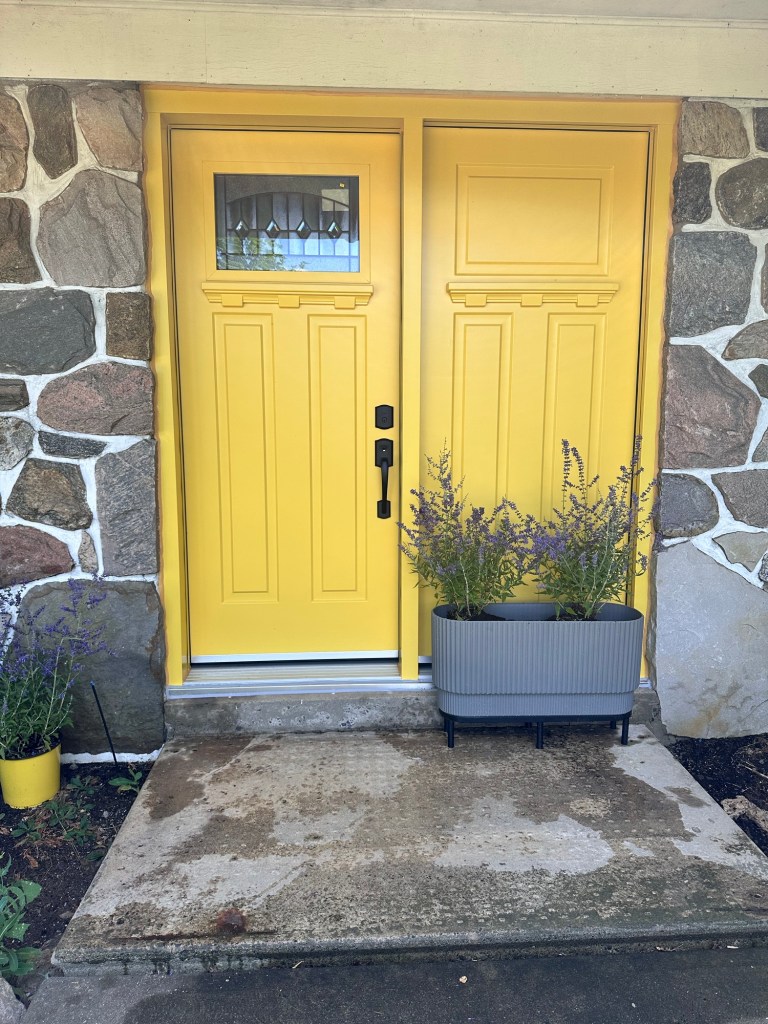
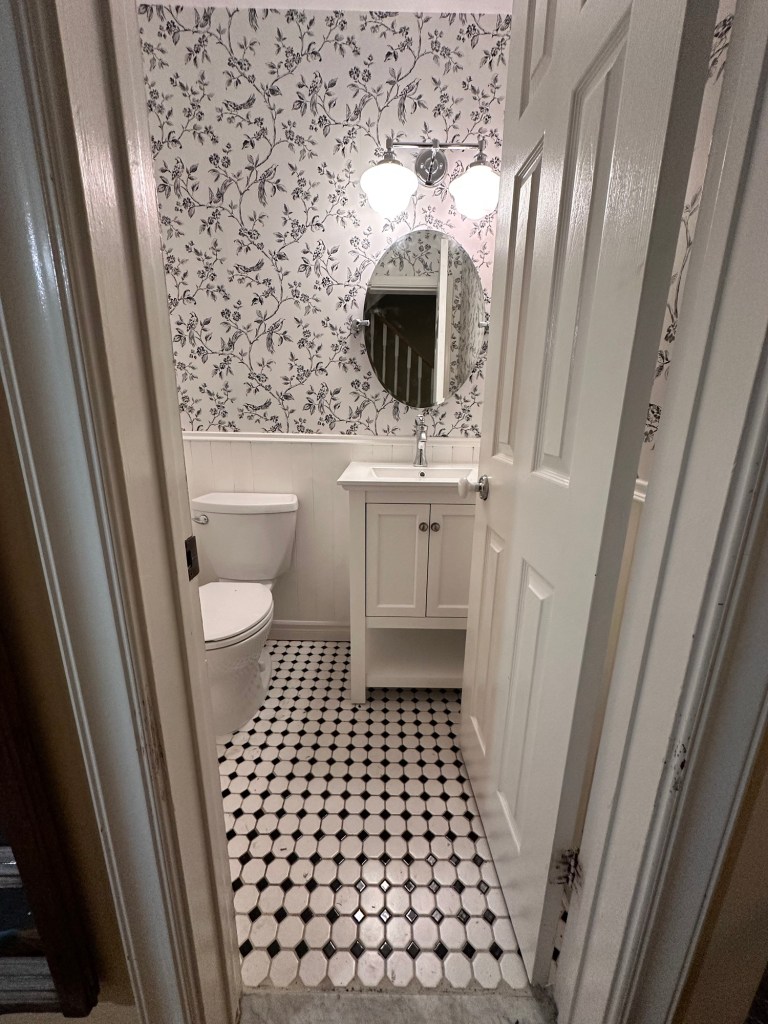
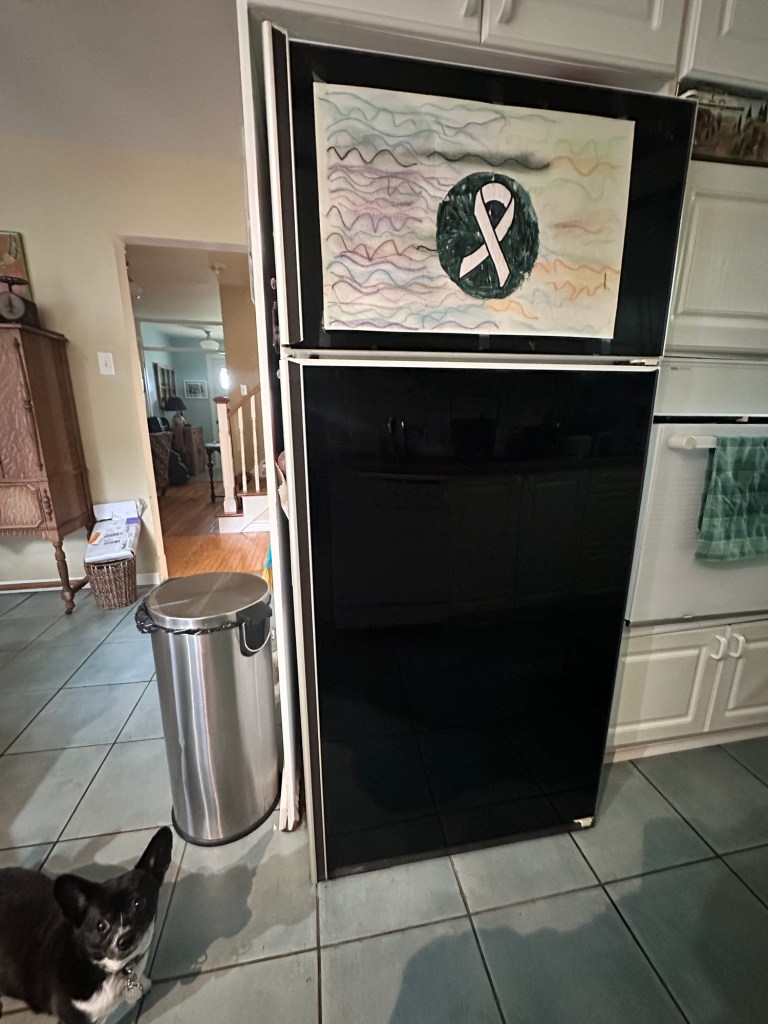
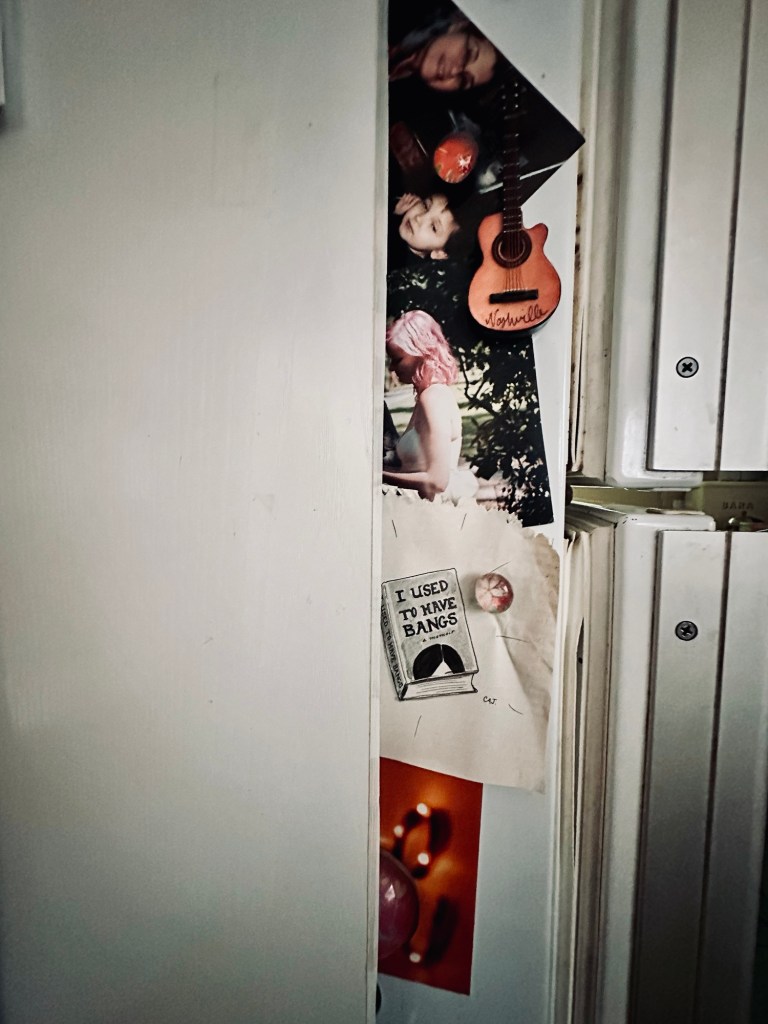
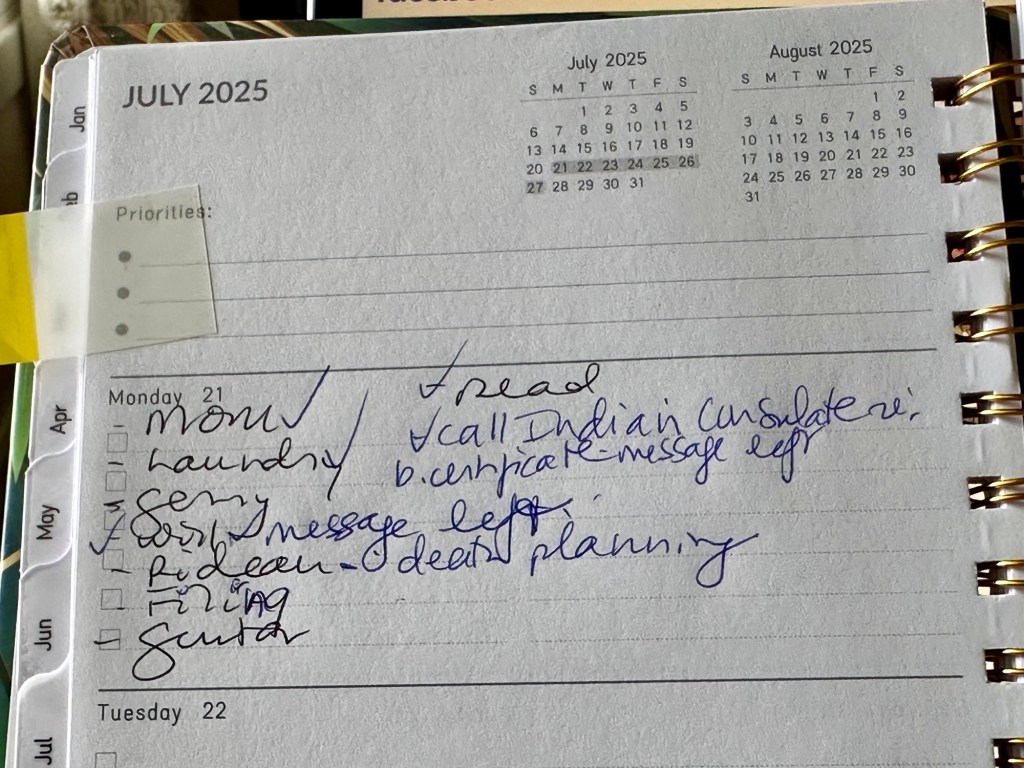
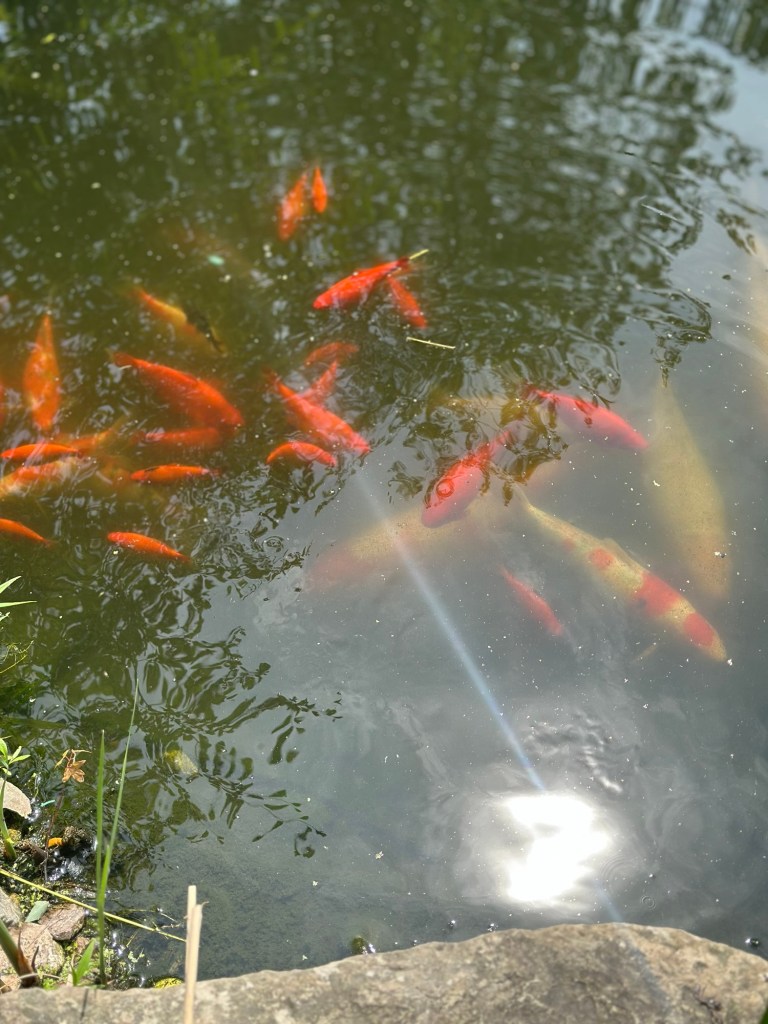


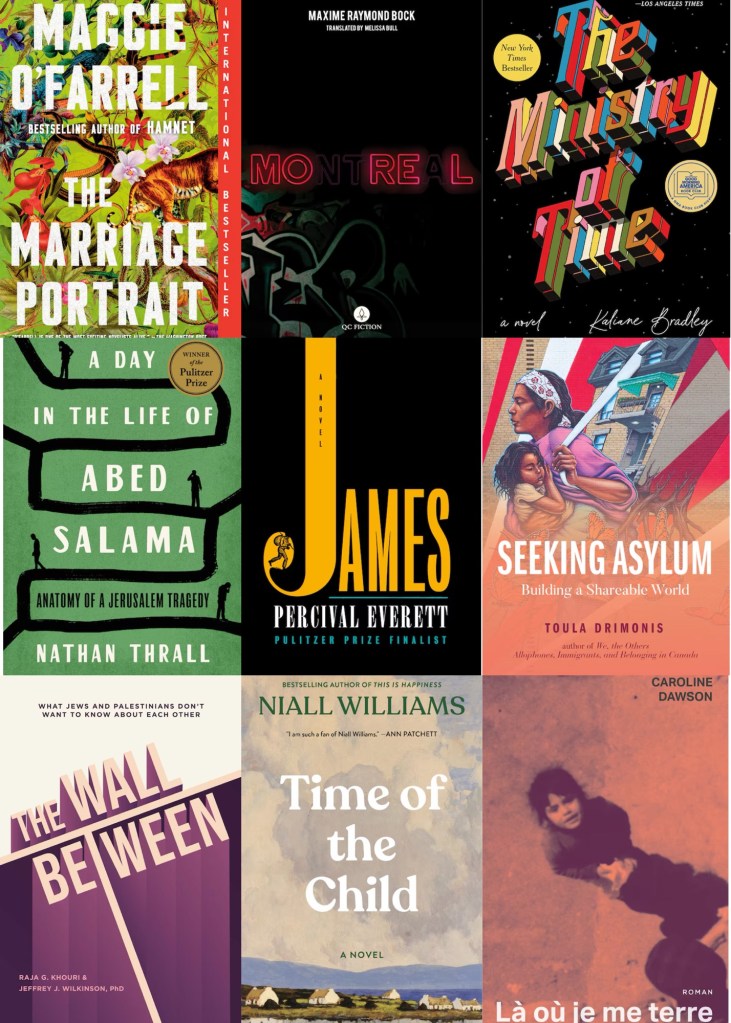
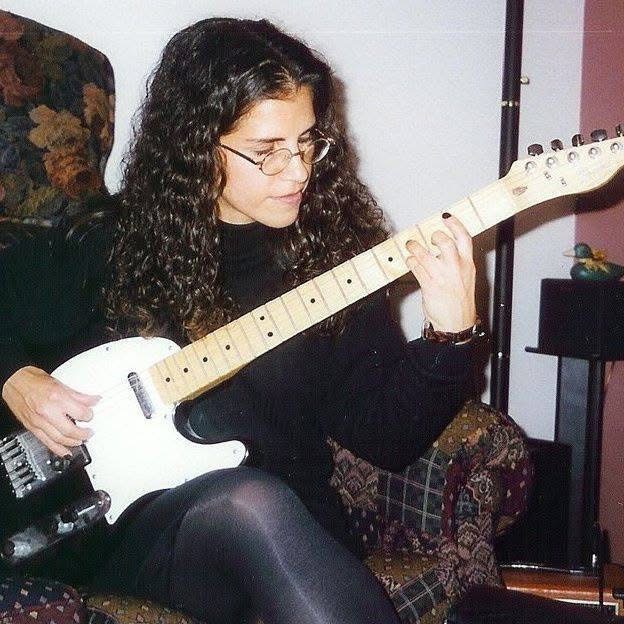

 bogeyandruby