Random February: an old post written 2015-2-24
My gynecologist died unexpectedly on December 30th. It’s always a shock to suddenly lose someone you know, someone who was integral part of your life even if you had to make an appointment to see him, someone who took care of you for thirty odd years and was supposed to live forever.
The last time I saw him was December 17th. I’d drop by the office to pick up a referral slip and waved to him as he sat behind his cluttered desk.
The last time I spoke to him was a week earlier when he called my house at 7:45 am and in a cheerful voice, asked me to call him back as soon as I got the message.
“That was fast.”, he said, when I finally got through. It wasn’t likely to be good news. I’d had a Pap smear in July, choosing to have it processed through the public system. He’d warned me it would take about five months. I wrote everything down: suspicion of precancerous cells, biopsy, colposcopy booked for January 14th, follow-up three months later. “You can even go back to work afterwards.” As if.
During my medical this past July, he’d asked about my son. I told him he was the best son I could ever ask for, and how grateful I was for him. When I was thirty-nine, he’d referred me to Dr. Biljan, a fertility expert. After complications following the first attempt at pregnancy, I’d decided to try one last time. My miracle boy, Sean, was born on February 9th, 2004 by emergency Caesarian. I can’t tell you how relieved I was that Dr. Bray was the attending surgeon that night.
In August 2007, Dr. Biljan died of ALS at the age of 49. Another shock. Calculating back, I realized he must have already been diagnosed when I consulted him a year or so after Sean’s birth, with the hope of having a second child.
These two doctors brought so much new life into the world, it’s hard to imagine they’ve left it.
I am so very sad for his family at this time, and for Julie, his longtime secretary. I’m also sad for what we have lost as a community: he was a fierce advocate for women’s health and more recently, campaigned for our boys to have free access to the HPV vaccine.
Dr. Bray took care of me for much of my adult life. He brought my son safely into the world. And now he’s gone. With that loss, a little more of my faith in the medical system erodes. It is my medical system too, one that I work in and from time to time rely on. I have seen it fail from the inside out on too many occasions to trust that all the dots will be connected after my colposcopy.
As my friend LC put it, “A woman’s relationship with her gynecologist is a long term and intimate relationship.” As far as I’m concerned, Dr. Bray is irreplaceable. And that’s the heaviness of death, isn’t it? The inconsolable part that stays with us forever.
R.I.P.
A good friend once admitted that she liked to hang around me mostly when she needed calming. I was her tea and chat amiga, someone with a talent for creating soothing, melancholy playlists.
(Perhaps what she really meant is that I’m boring.)
I can only presume that I don’t hear from certain friends these days because they are happy and thriving and have no desire to listen to sad music.
This makes me glad even though I miss them in a way only an introvert can: with a longing to see them that includes a very clear exit plan.
I will put the kettle on and some cookies out just in case. After all, January blues (and snowstorms) are just around the corner.
A couple of months ago I was asked what my plans were for Christmas. When I didn’t give the expected answer, I was told, “But you’re not even Christian, why would it matter to you?”. It was statement rather than query, coming from someone who, ironically, is not Christian either, but who can at least claim to have a religion.
Those words, whether by intention or not, prickled, stirring up familiar feelings of exclusion and hurt. They implied that first-world, modern-day Christmas celebrations are only about the birth of Christ, and as such, only those people invited to the baby shower need attend subsequent birthday parties. In other words, I don’t get a say on where I want to be and who I want to spend Christmas with even though I have a tree up in my house and presents under the tree and a son who is Protestant ( but thinks he’s Catholic) and the same stat holidays as everyone else.
Let me be clear, my mother is Christian and my father is not. Dad tried to teach us his religion but the words weren’t in a language we could understand, and being a pragmatic and logical man, he soon stopped trying. As a compromise, because that is the best way to get along when there are profound differences in a culturally-mixed marriage, we kids were raised in a secular household, celebrating most of the Christian holidays while respecting some of the Sikh traditions, picking and choosing the good parts and leaving out the bits that made us uncomfortable.
I know enough about the story of Christmas to be able to name all the main characters involved. Indeed, back when the schools were divided by religion (Catholic and Protestant, no less) it was difficult to avoid these stories. As a kid, I made gold-painted macaroni crosses at Brownie camp, read Gideon’s pocket bible on a family vacation, sang the Lord’s Prayer along with Sister Janet Mead, hung on to every lyric in Jesus Christ Superstar, and even attended Sunday school (my own initiative) at the local Salvation Army Church down the street from my parents’. I celebrated every single Christmas both spiritually and commercially, bought presents for everyone with my own money, and learned about the true meaning of Christmas from Charlie Brown.
Somewhere along the way, I got tired of being asked what tribe I was from. I grew weary of being welcomed as a “non-believer” at Church services. I avoided attending the “You People Who Come Once A Year” sermons. I couldn’t relate to the hypocrisy, dividing lines, or righteousness of organized religion but I still wanted to embrace the compassionate, community-oriented parts of it.
Years ago, I developed a friendship with a former patient who happened to be an eighty-six year old Dominican nun. She once said to me “You’re such a good person, I can’t believe you aren’t Catholic!”. I replied, “You don’t have to be Catholic to be a good person.” You also don’t have to be Christian to appreciate the significance of this time of year, in all its glory and its heartbreak.
So yes, it does matter to me. Thanks for asking.
I’d like to take the opportunity to extend best wishes to my faithful readers, all nine of you.
Oh, and Merry Christmas to the rest of you, including the good, non-Catholics out there.
S ❤
This is an old post from three years ago that popped up on facebook today. I decided to archive it here.
1) “Without unions, you wouldn’t have labor laws in the first place. The right is the right to collective bargaining, not a right to a good deal. But dismantle collective bargaining rights, and you have no opposing structure to protect – even minimally – against exploitation.” — Cameron Skeene
2) Unions developed as a way for workers to join forces against the inequality of bargaining power that exists between an individual worker and an employer. When an employer is dealing with one employee, the balance of power is with the employer. When the employer is dealing with an organization that represents all employees, there is less power imbalance. In other words, there is strength in numbers.
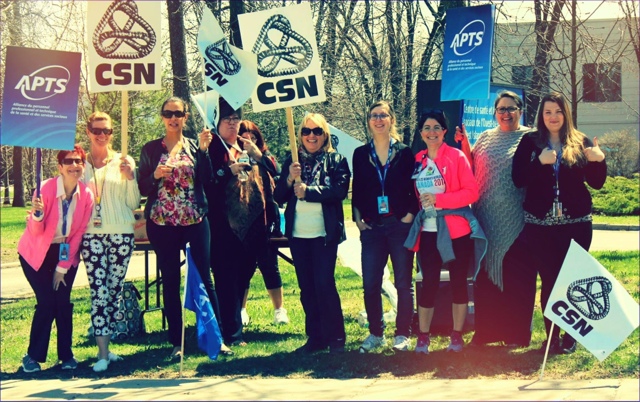
3) The strike mandates were obtained through a democratic process. Not everyone voted in favour of a strike but an impressive percentage of members did, and these members represent a variety of different unions and job descriptions. We are not alone ; we are part of a common front. Nobody wants to strike. Quite the contrary. This strike is a last resort, the result of months of frustration over the government’s refusal to negotiate a new collective agreement in good faith. It is a legal strike and essential services will be provided.
4) If you can’t make the cause about you, then make it about someone else, perhaps a devoted teacher you know or admire, a child with special needs who is struggling, a vulnerable client without an advocate who is on an endless waiting list.
5) I am exhausted after 30 years working in public health. And yet my colleagues with only a few years experience are showing the same signs of wear and tear. It takes a lot more energy to do the job than when I started years ago. Clients are older, more frail, and resources are more limited than ever before. I could choose to coast until my retirement but what about the people I leave behind? Will health issues force my younger colleagues to leave the system? Or will they stay, depleted and jaded, until they drop? I am standing up for all of you, even though I am tired too. The system is broken but I refuse to give up on it. I will not be apathetic.
“The opposite of love is not hate, it’s indifference. The opposite of art is not ugliness, it’s indifference. The opposite of faith is not heresy, it’s indifference. And the opposite of life is not death, it’s indifference.” ― Elie Wiesel
6) The new health reform will centralize services. As a result, there will be less representation from the community on many levels. As unionized members, we have a strong, collective voice and an established medium by which we can express it. Let’s not squander this opportunity to demand better, on behalf of our most vulnerable citizens.
“Scientific data show clearly that a decentralized system is closer to the centres of decision- making and allow for health and social services to be better adapted to populations needs, especially those of the underprivileged or those living in rural or outlying communities. Contrary to industry, which seeks the production of uniform and standardized services at the best price, health systems need to be able to adjust services to the needs of the populations being served.
The disappearance of local institutions risks standardizing services throughout a regional territory, hence diminishing access to more marginal populations while increasing the inequalities of health. The creation of regional mega structures will result in an important loss of linguistic, cultural and community identity. Those institutions that have been serving their community for many years and are essential for their role in maintaining community ties and supporting community development will be lost.
Scientific evidence does not support the presumption of Bill 10 that there will be a reduction in bureaucracy with the centralization of decision-making. National and international experience has shown time and time again that the proposed reform will not have the desired effects and, in fact, will make healthcare delivery more complex. We should learn from these experiences instead of increasing the centralization of decision-making in our healthcare system.” — François Béland
7) Do a little research about the history of unions and you will see that despite the bad rap they get today, a lot of good has come out of them and non-unionized workers have reaped the benefits too. Here are a few examples: child labour laws, minimum wage, workplace safely laws, pregnancy/parental leaves, sexual harassment laws, social security, public education for children, etc.
8) A little fresh air, some exercise, and solidarity is good for team building.
9) Our union has worked very hard to represent us under difficult circumstances. Whether you opted to strike or not, please show them your support.
10) “Our lives begin to end the day we become silent about things that matter.” — Dr. Martin Luther King Jr.
In my dream
a small child plays peek-a-boo in a crib
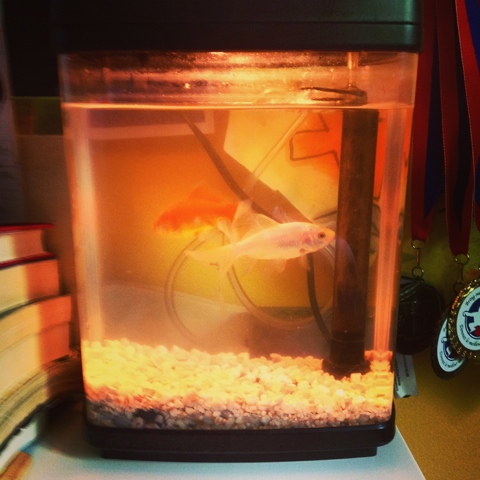
I am not claustrophobic yet cannot imagine swimming in a fishbowl while big moon faces peer in, gigantic shapes that block the sun with their useless gaping mouths sucking oxygen from the room, stubby fingers tapping ripples through the glass.
I wanted to make life better (for a while) and save your tiny world with clean water and a clear view of the moon and the sun, but I tried too hard and instead, turned the fishbowl inside out, causing your death with my stupid pet store hose and my giant, clumsy hands.
Artiste pluridisciplinaire
Feeding TBRs since 2014
Life in Kana-text (er... CONtext)
Exploring the Jungles and local life of Indonesia
Historien, auteur, conférencier, enseignant, consultant
A French word, a photo, and a slice of life in Provence
Canadian Author and Activist
Un senryū érotique chaque matin, pendant mille jours
Achieving Workplace Success
hannah kozak photography
Inside the mind of an immigrant
The Contemporary Photobook Magazine
Musique celtique • Celtic Music
Epic fantasy & military sci-fi author.
random universe
Jules Torti Stirs the Pot
The Musings of a Writer / Editor in Training
Writing, Poetry, book reviews, interviews, music reviews, contests, art